PURA GUNUNG AGUNG… Lombok’s Hidden Temple
A couple of years ago, we decided to search for a mysterious Balinese temple in Gunung Sari. We’d heard snatches of information about this temple over the years but – as the main historic temples (such as Lingsar, Suranadi, Gunung Pengsong, Batu Bolong, etc) are so well known – it didn’t seem that such a little-known temple would be very important.
How wrong we were… this temple is easily one of the most beautiful temples in Lombok!
We visited again last week and were happy to see that this special temple is just as serene and magical as the first time we went there.
Finding Pura Gunung Agung (“Pura” means temple) is not easy. The temple is also known locally as Pura Gunung Sari, named after its location in the back streets of Gunung Sari village (we’ve included a map below).
Turning down a small side street, we entered an unassuming parking area in front of the temple and, after borrowing sashes from the temple caretaker (whose house is adjacent to the car park), we entered the compound and were again astounded by the magnificence of the scene before us.
Just through the gates, the Madya Mandala compound houses the pavilionswhere Hindu people prepare for ceremonies and store upakara (praying equipment).
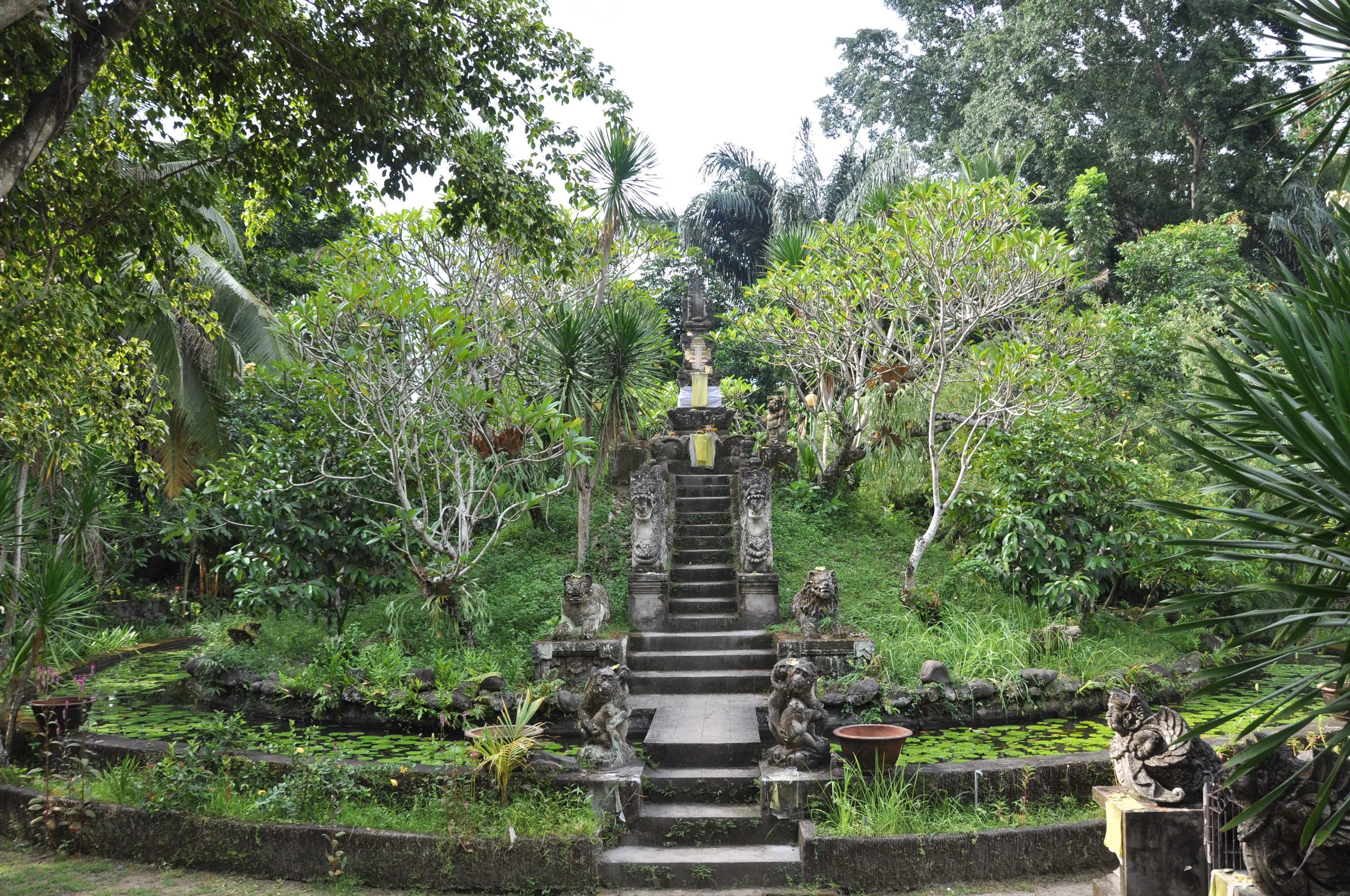
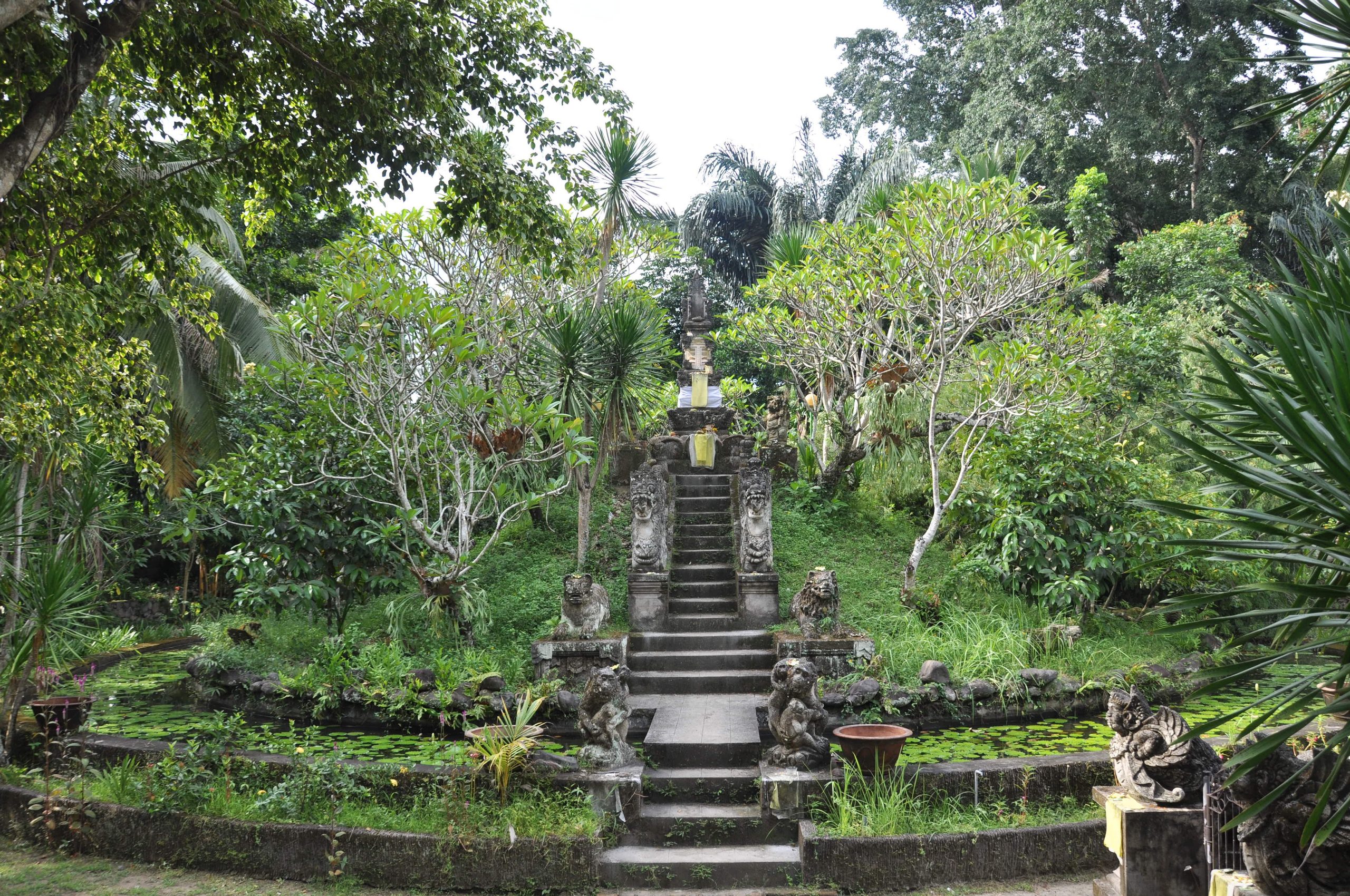
To the right, a circular mound ascends in a series of tiers, each with individual shrines and statues built on consecutive circles rising against a backdrop of jungle greenery.
The smell of incense and flowers fills the air and the hush seems surreal. We have truly entered another world.
The temple is a living monument, with statues hidden amongst trees and flowering plants. The jungle wraps around the temple and sacred Beringin trees create a towering backdrop. The grounds are kept immaculately neat and it is obvious this is a place revered by the people who worship here.
Pura Gunung Agung was apparently built in the 18th Century by I Gusti Ketut Karangasem, a Balinese war commander at the time, who was in Lombok on a mission to fight in a battle between the Selaparang and Banjar Getas Kingdoms of Lombok. Before departing for Lombok, he prayed for the success of his mission at Gunung Agung in Bali.
Having successfully completed his mission, the Commander was returning home with his troops when he stopped at a beautiful place in the jungle with ancient trees, flowering plants, animals and an underground spring.
So captivated was he by the beauty and serenity of this place, he decided to build a temple here as a symbol of thanksgiving for his successful mission.
The temple he built was named after the place where he had prayed before going to Lombok: Gunung Agung.
The temple complex he created serves as a spiritual link to the Gods and Goddesses of the sacred mountain, Gunung Agung, for the Balinese Hindus living on Lombok.
It is easy to imagine, back in the 18th Century, how far away Gunung Agung must have seemed to the Balinese who settled in Lombok, especially with no roads or modern transportation, and a vast series of jungles separating them from even visual contact with the mountain.
The temple perfectly preserves a time in Lombok’s history but, as a living monument that operates as a place of worship to this day, it has been added to over the years, with altars and statues representing significant times in the temple’s history.
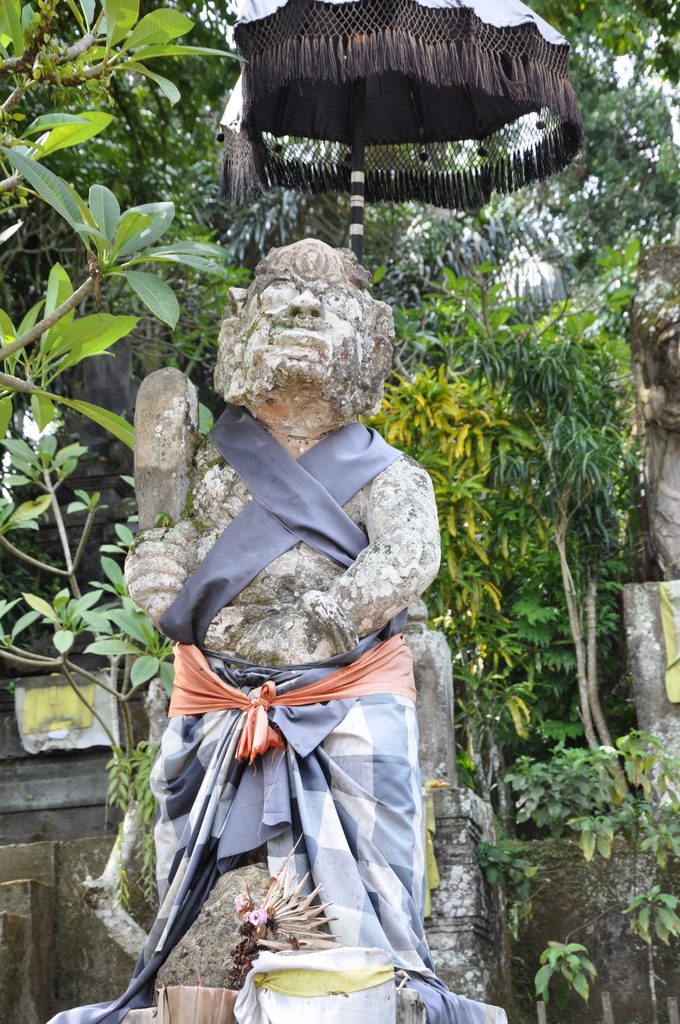
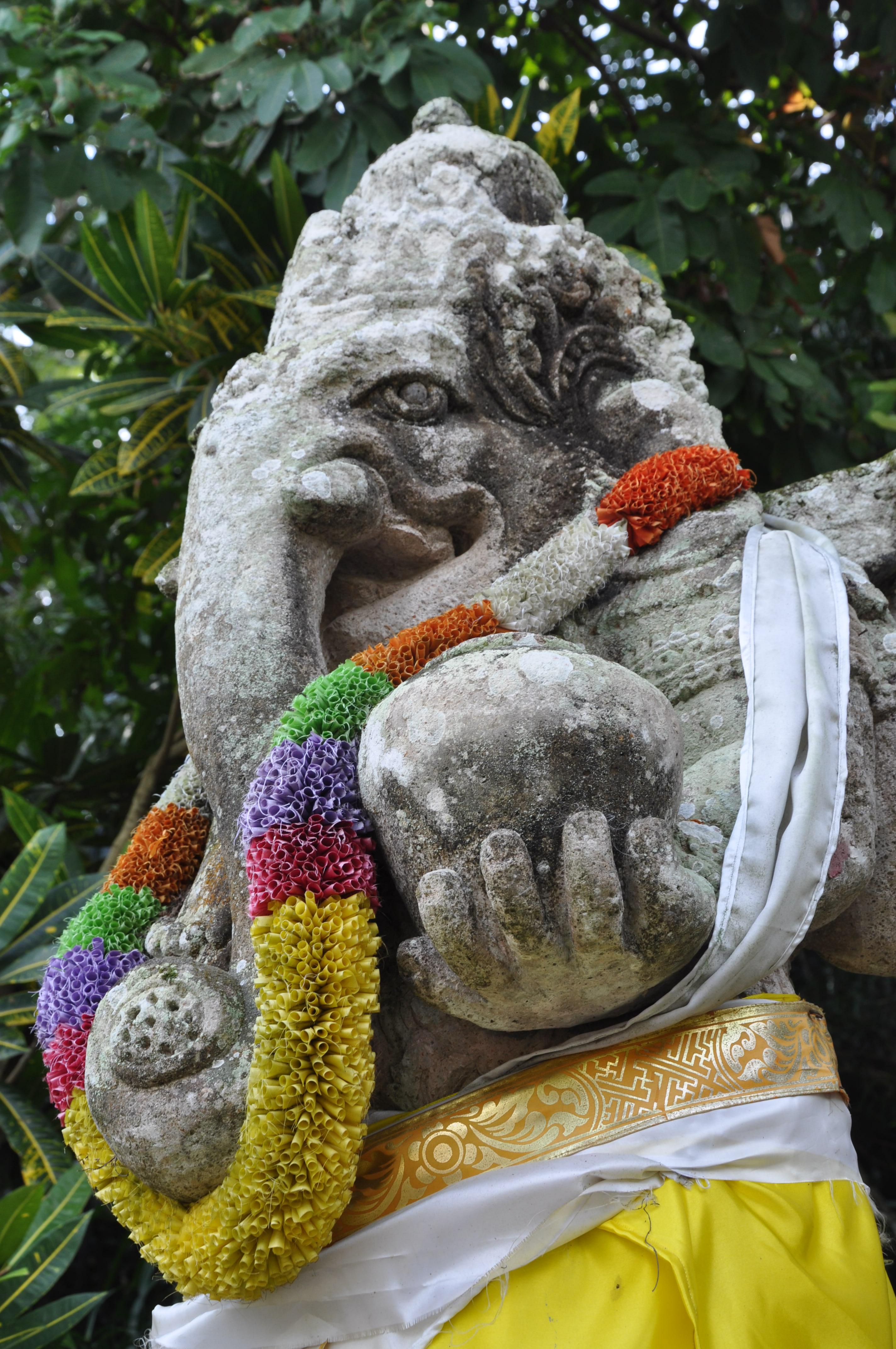
On different levels of the temple are shrines and statues of Hindu deities, such as the magnificent statue of the revered elephant God, Ganesha, on the first tier; and the serene and lovely shrine to the Goddess Uma on the ground level.
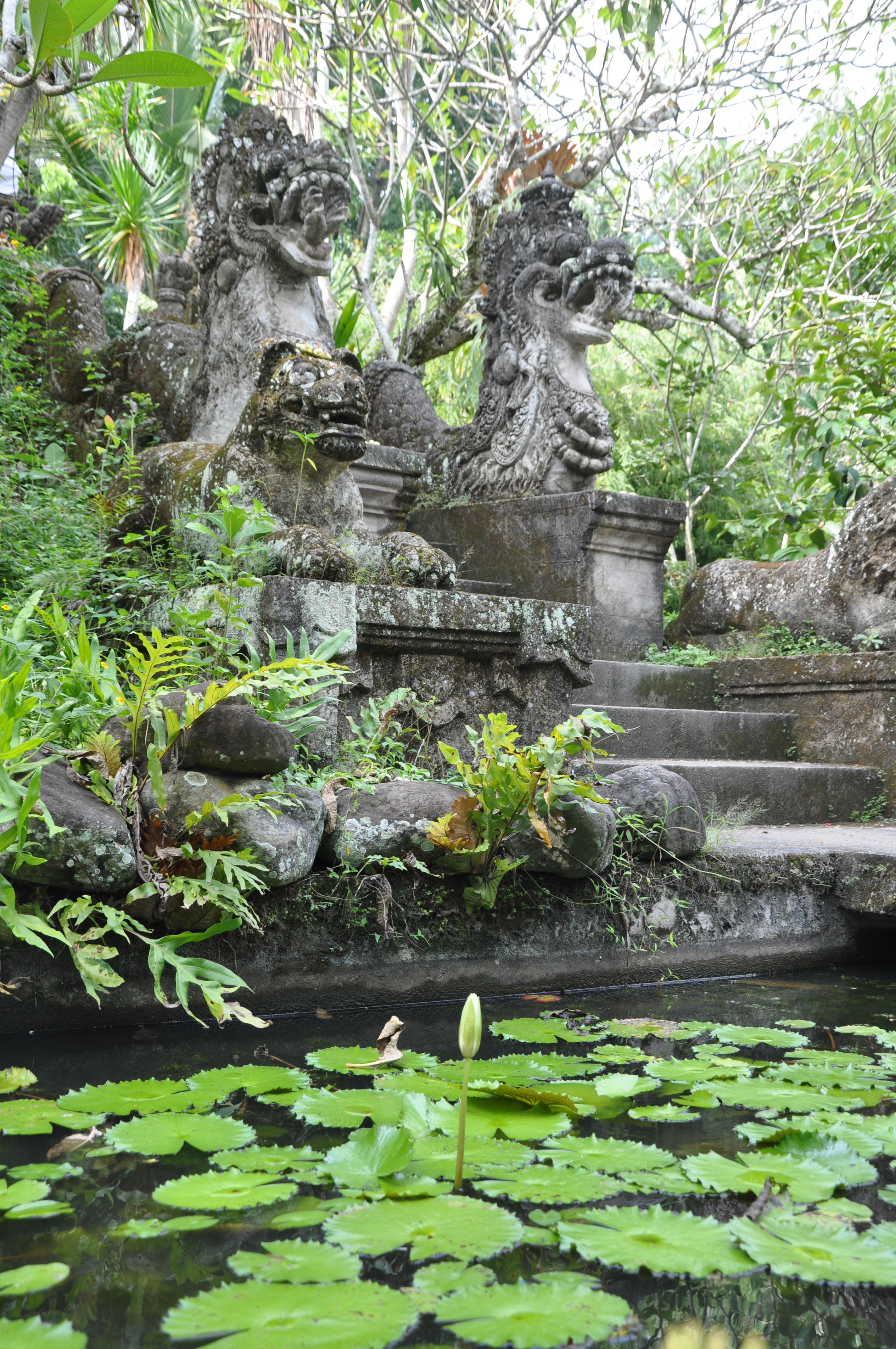
Intricately carved statues of dragons protect the stairs leading up to the padmasari or throne of the Gods at the summit of the temple.
The summit can also be reached by two other sets of stairs, leading up both sides of the mound, with each decorated by different figures of temple guardians.
On each tier, stop to search between the plants and trees– the temple is a treasure trove of hidden statues and symbolism.
Some of the statues are very old, depicting Lombok’s original animist beliefs, while others are newer and have been added throughout the centuries.
After spending a peaceful and delightful hour exploring the temple, we descended to second part of the temple!
Entering this inner sanctum is nothing short of breathtaking; it is a time capsule, evoking a true understanding of how the temple must have been in the 1700’s.
This part of the temple is called Taman Indra Kila and is a sanctuary or garden for the Gods and Goddesses.
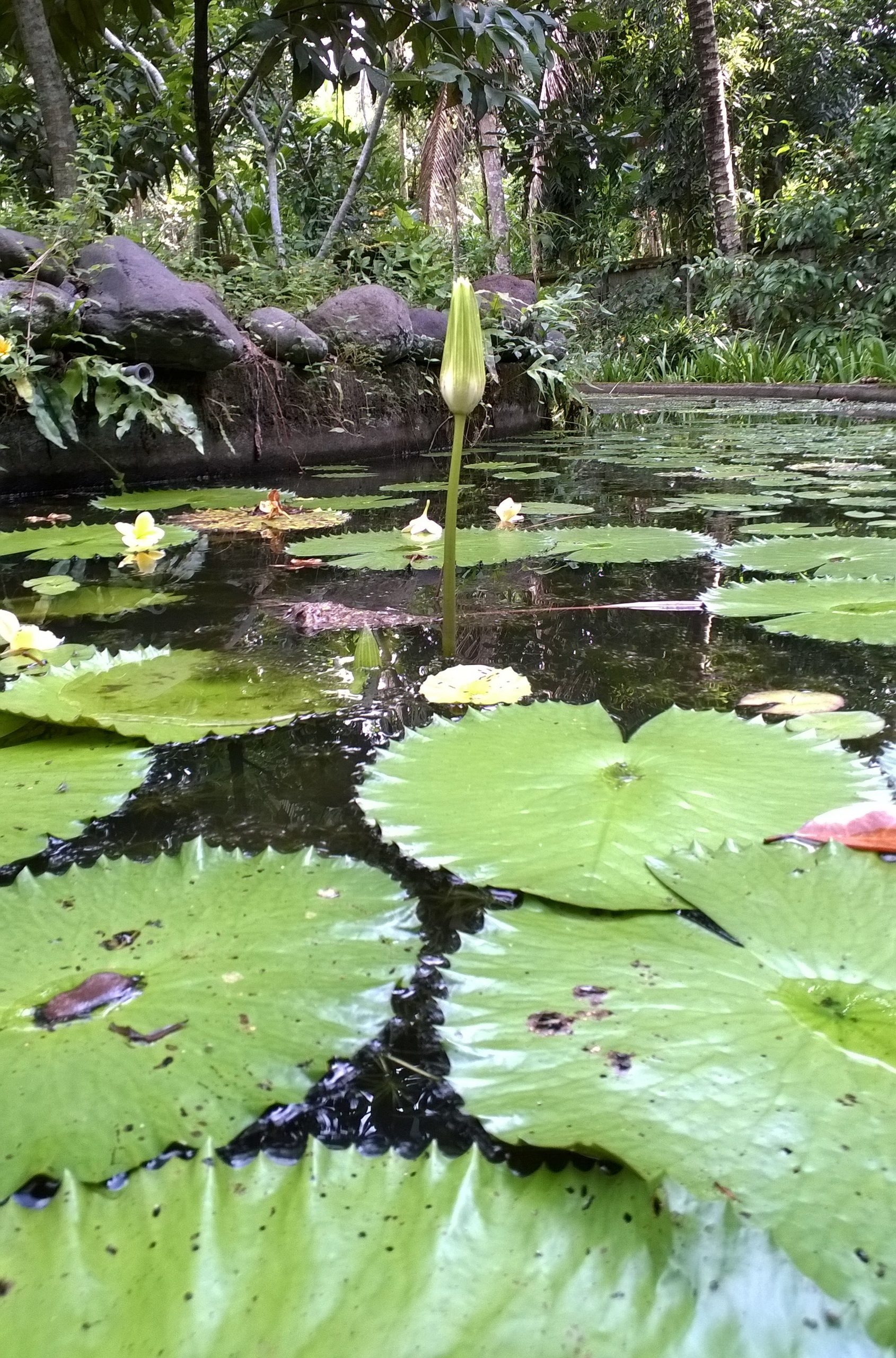
A short flight of stairs leading down is guarded by monkey statues and just ahead rises another temple mound, surrounded by a moat of water filled with water lilies.
A feeling of serenity blankets the whole compound. Jungle surrounds the edges, huge butterflies and dark red dragonflies dart from flower to flower and dip into the water of the moat.
Statues of tigers, monkeys, turtles, lions, and other animals peek from behind plants. Gods and Goddesses stand serenely, following you with their eyes.
To the right is the petirtaan or sacred bathing pool for ritual cleansing. This is unlike any we have seen before in Lombok and has been added to in recent years.
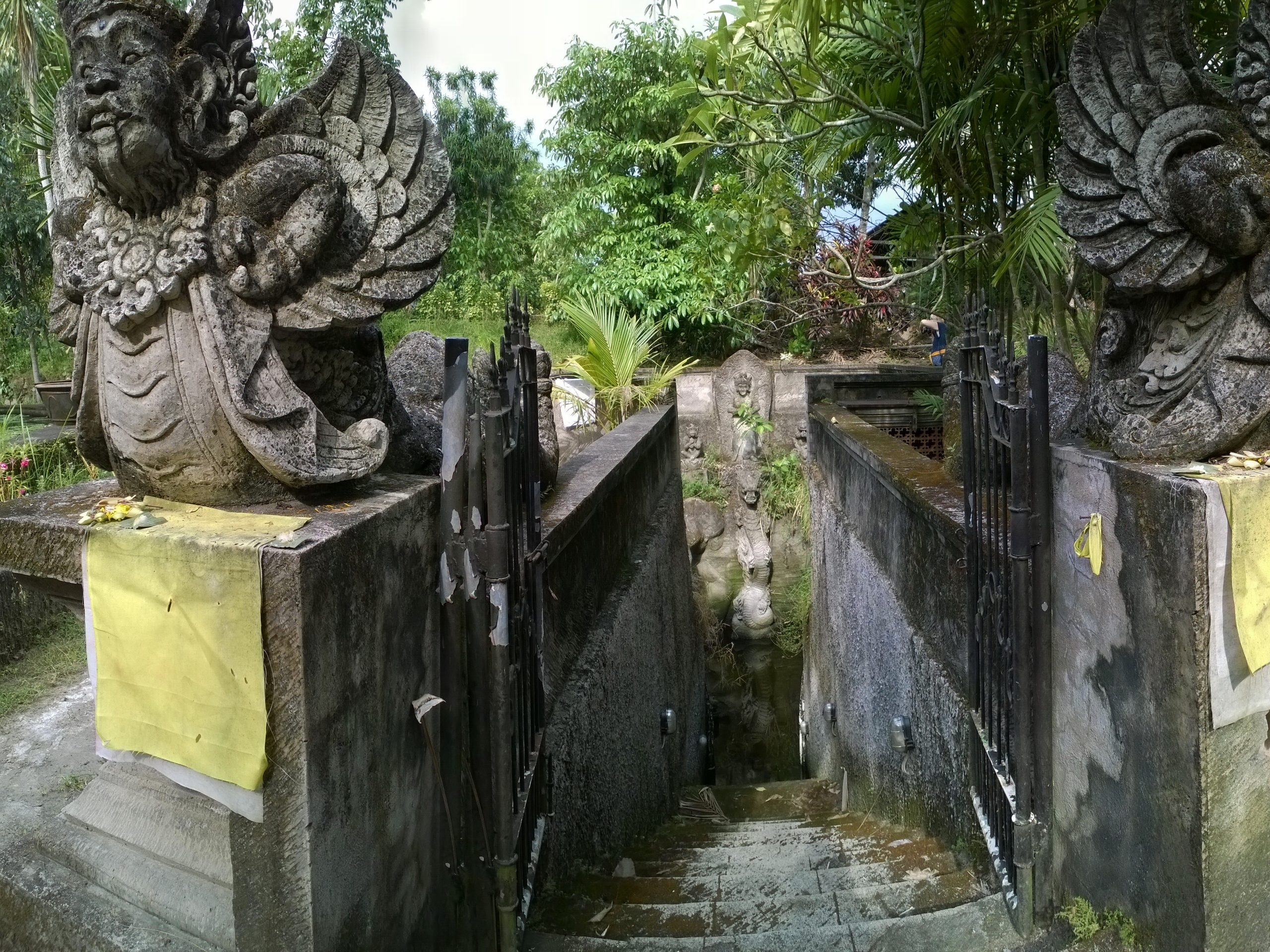
Mythical winged dragons guard either side of the gated entrance with steps leading down to the pool, around five meters below.
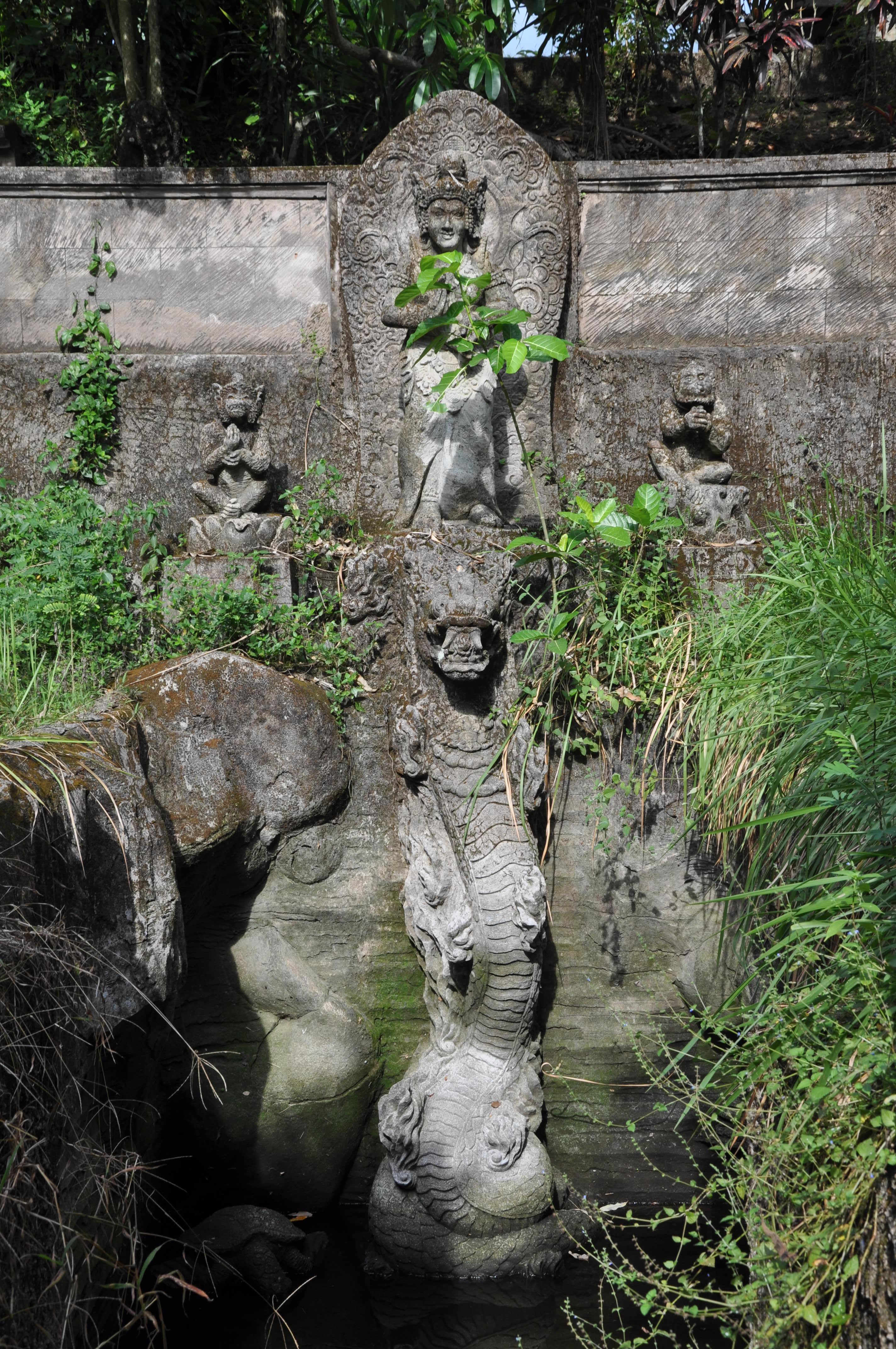
Overlooking the pool is a statue of the Dewi Anjani – the Goddess believed to inhabit Mount Rinjani on Lombok.
She is guarded on either side by two monkey figures and underneath, leading into the pool, a huge dragon coils up the wall beneath the Goddess, guarding the east.