NGAYU-AYU… Preserving the Past
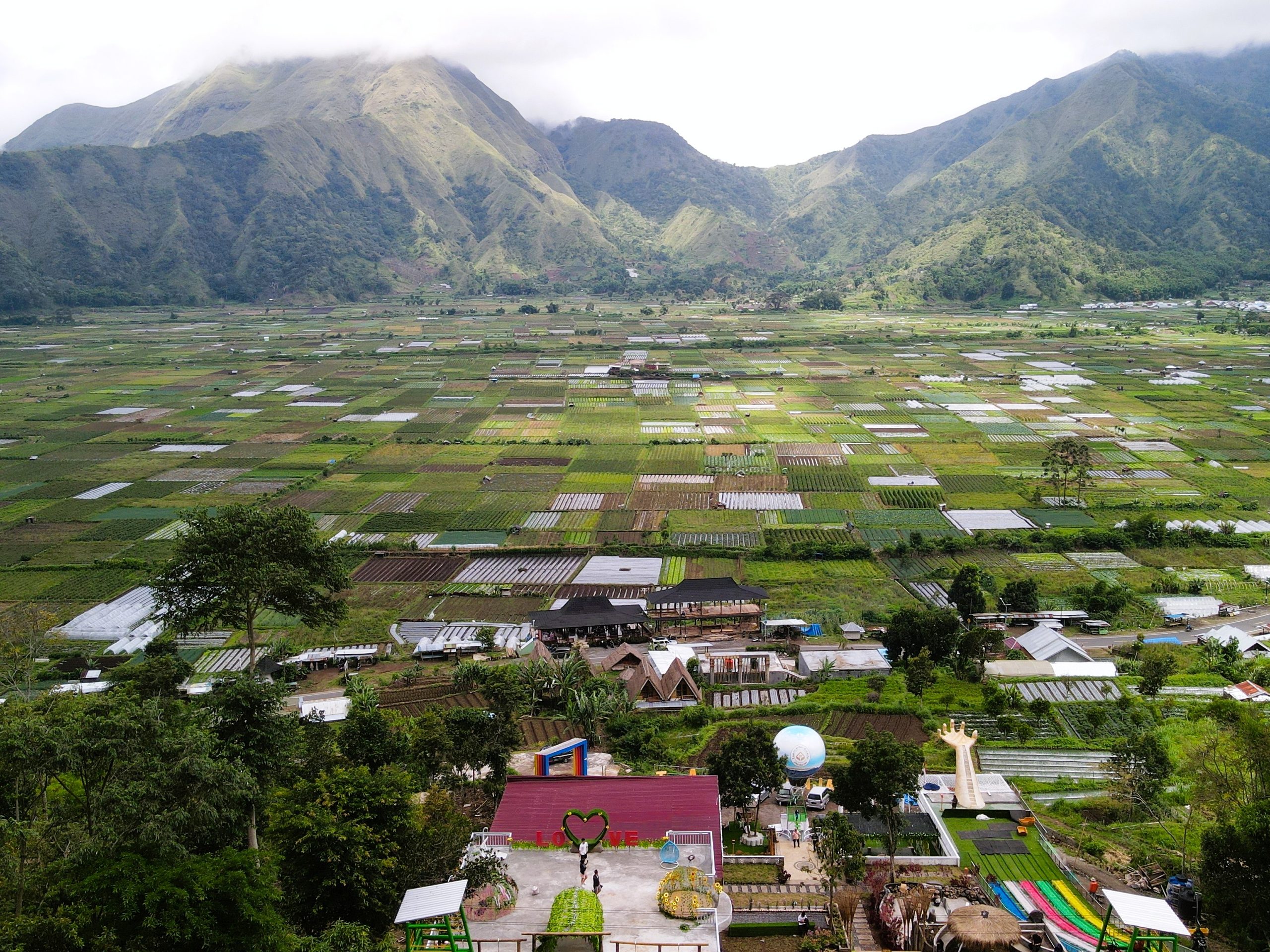
The sun has just risen and pure, clear light floods the mountains and valleys surrounding Sembalun Bumbang, a town perched high on the northeast shoulder of Mt Rinjani, 1,065 meters above sea level.
The normally quiet town is crowded with thousands of visitors today, as people flock from across Indonesia and throughout Lombok to witness an ancient ritual that has been practiced in this village for hundreds of years.
6 June, 2013 marks the final day of the Ngayu-Ayu celebrations that have been held in the village over the past week, and gives those attending a small glimpse into the rich heritage of the Sasak people.
Ngayu-Ayu takes place in Sembalun Bumbung every three years and is held at the beginning of the planting season. It is an ancient nature-based ritual believed to give protection, and to bring prosperity and fertility to the community whose lives depend on agriculture.
Sembalun is one of the earliest places of settlement on Lombok and an area renowned for its cultural traditions, which preserve the history of the Sasak people; paying homage to the roots of Lombok civilisation and pre-Islamic traditions.
The name Sembalun itself derives from the root words “Sembah” (meaning sembayang or “to pray”), and “Hulun” (leader or head), hinting at the area’s role for the community.
Records of the ritual of Ngayu-Ayu date back more than 600 years and today the ceremonies are preserved as an important part of Lombok “adat”.
Adat is a complex word encompassing tradition, custom and culture. It is distinct from religion and political influence; even today, while Lombok follows the Indonesian law and political system, adat has its own power in the management of society and the behaviour of the community.
Today, the whole community – together with thousands of visitors, photographers and reporters – gathers outside the house of the adat leader in Sembalun Bumbung. There, he greets officials and welcomes the adat elders and members of the Alliance of Indigenous Peoples: the group who will partake in the main rituals.
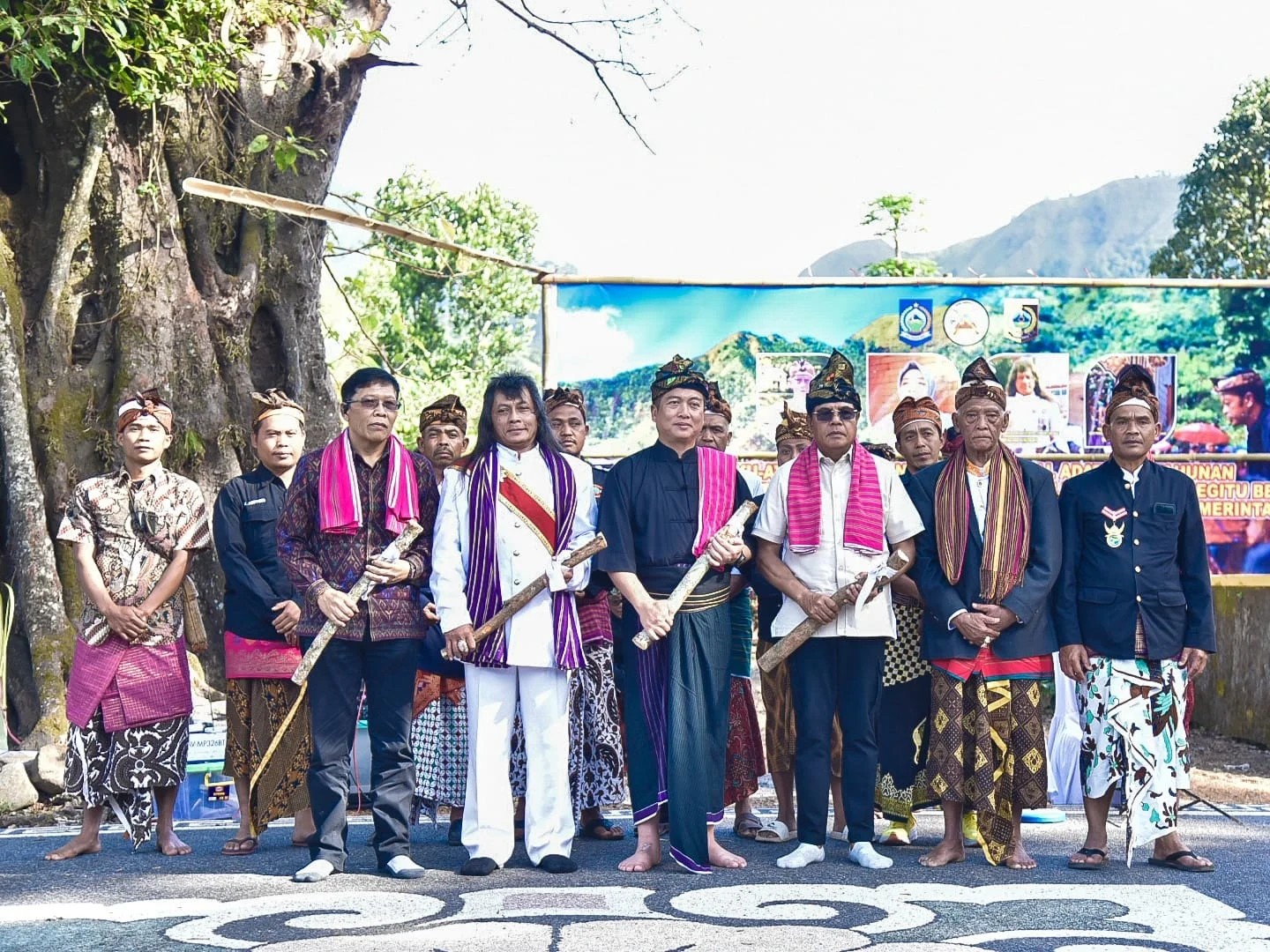
He leads the prayers and chants, and then blesses the group, anointing their heads with a mixture of rice and spices meant to ward off evil and protect them during the rituals.
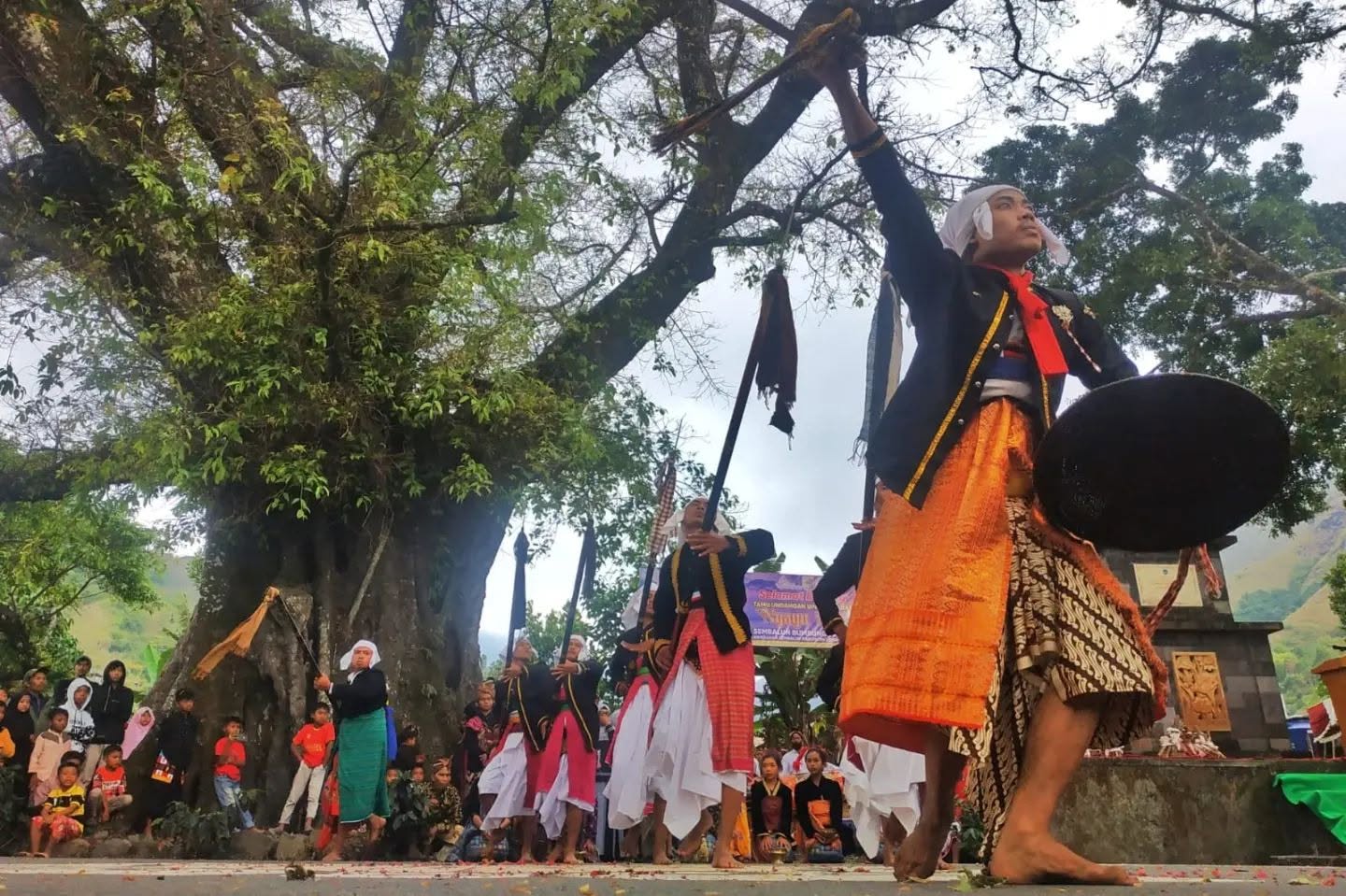
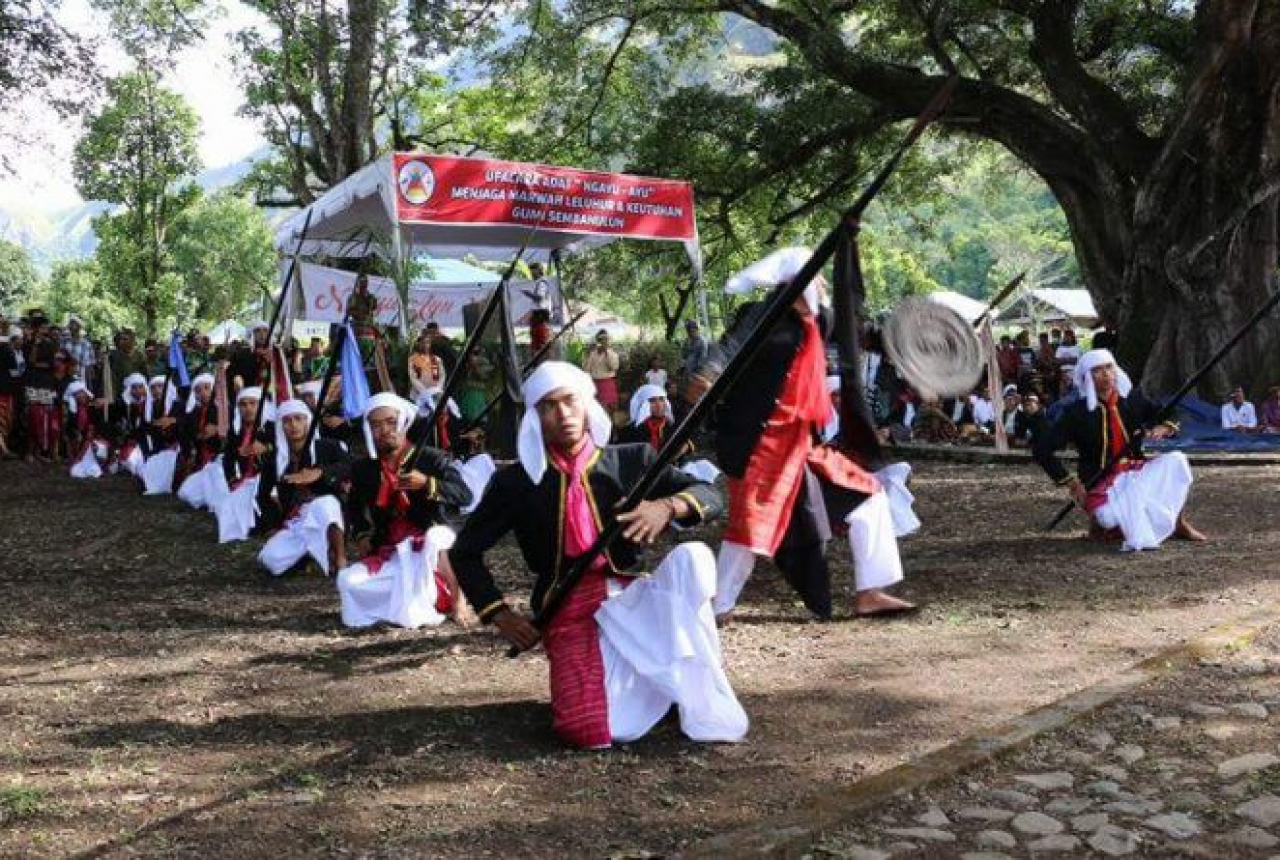
Outside, handsome warriors stand guard – dressed in traditional woven cloth and wearing white sapuk (cloth head dresses). The spears and weapons they hold are also part of the history of Lombok; sacred and ancient weapons hundreds of years old.
Musicians play huge drums, called Gendang Beleq, and gamelan instruments that are also more than 600 years old. The weapons and instruments are stored as treasures in Sembalun and are only bought out in public during important ceremonies such as Ngayu-Ayu.
Once the blessings and preparations are finalised, the adat group and the warriors lead the crowd through the village to the community field. They carry ceremonial dishes of rice, betul and other offerings, as well as snacks made into the shapes of insects and small animals.
Solemn members carry twelve bamboo containers which hold holy water collected from 12 springs that exist in the jungles around the village and provide irrigation for the abundant crops grown here. This water is considered a sacred symbol of the “water of life” and the containers are carried carefully, shaded by umbrellas.
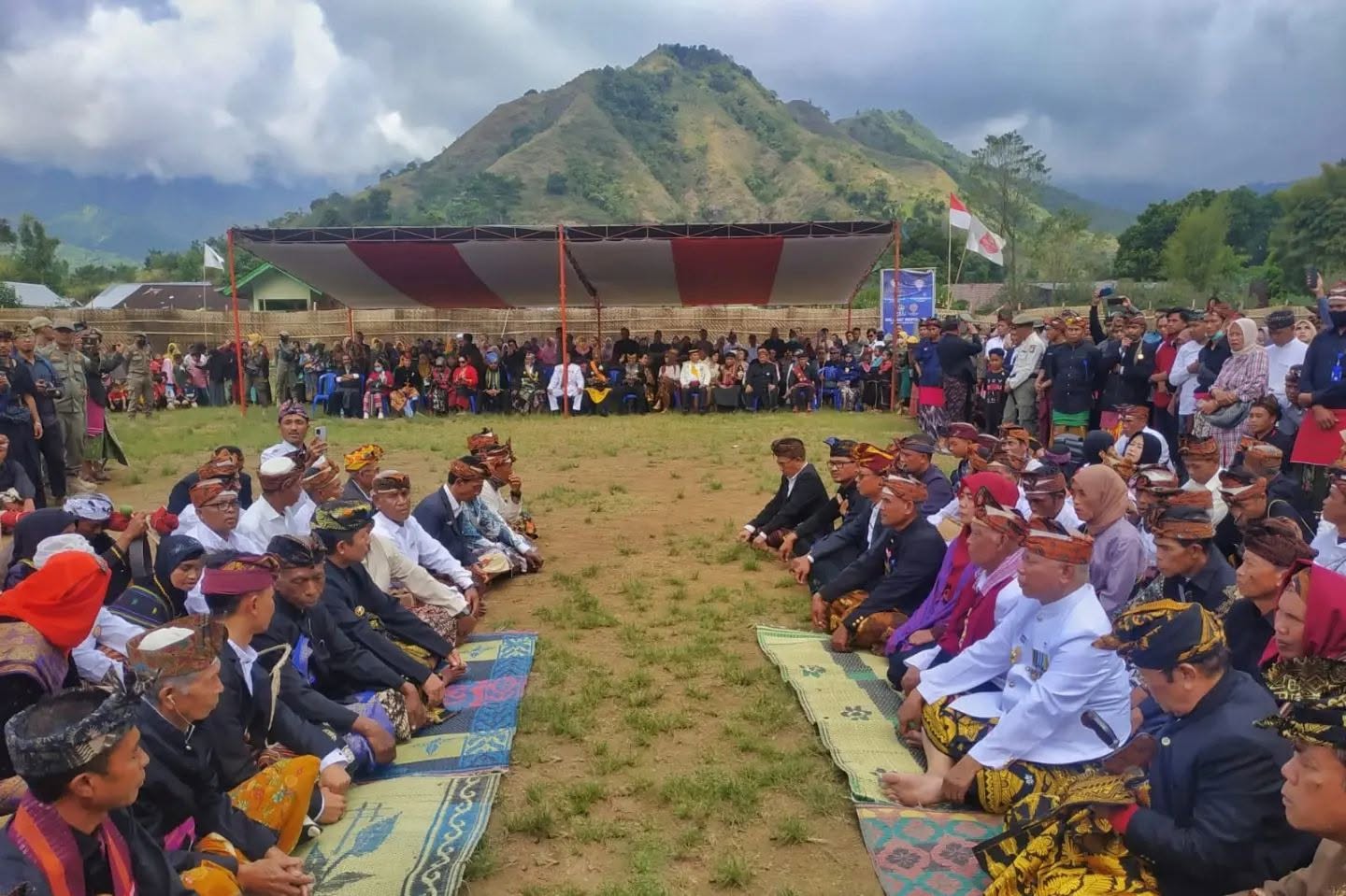
At the public square, another group of warriors stand proudly with spears held high. Amongst the officials are a group of Kings, Queens, Sultans and their wives – representing the traditional royal families from throughout Indonesia, including the Chairman, Ida Cokorda Ngurah Jambe Pemecutan (the King of Denpasar IX) and his entourage.
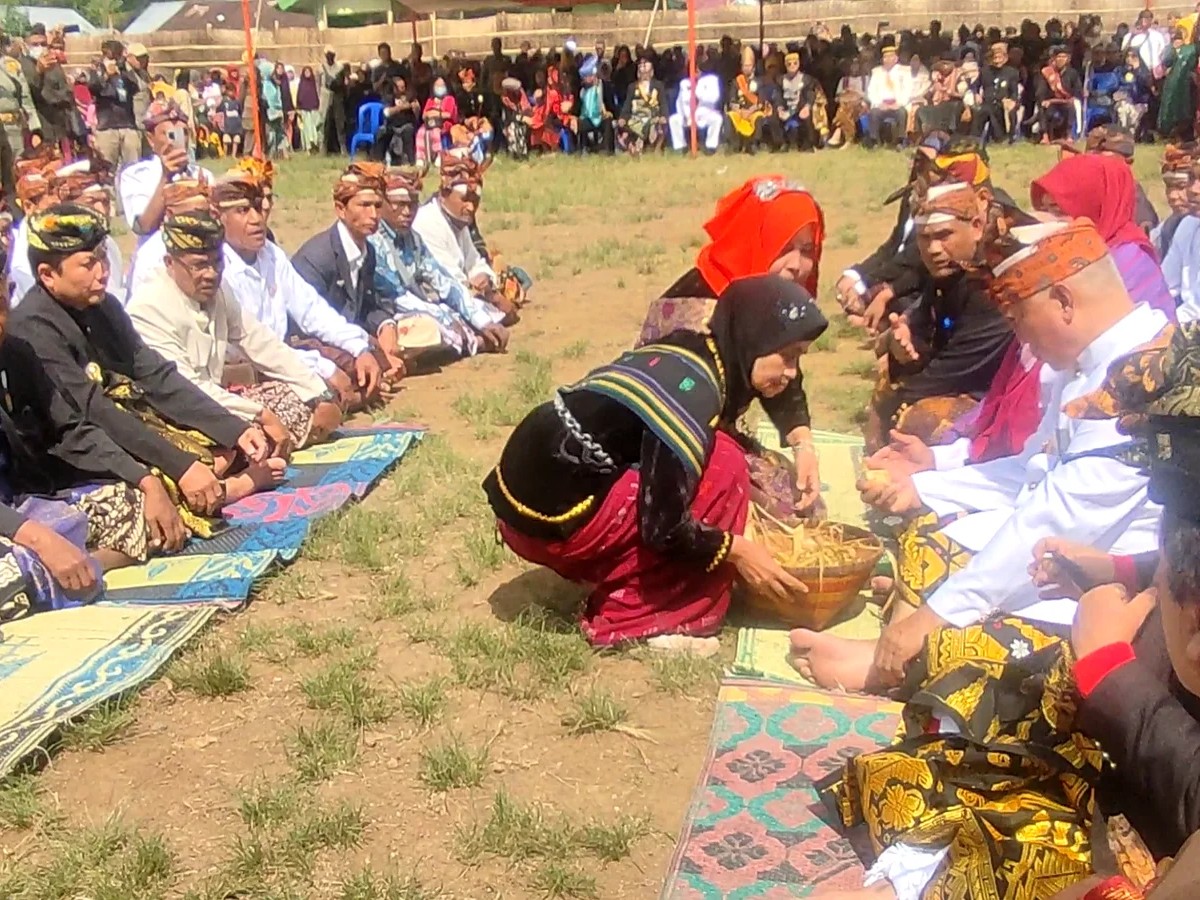
More chants and blessings are held in the centre of the field, as the two groups of warriors line up on either side. Drums beat and gamelan gongs chime as the pemangku (adat leader) signals it is time.
From bags, small parcels of ketupat appear – woven bunches of coconut leaves that contain steamed rice. The opposing teams of warriors hurl the small missiles at each other in a mock war, called Perang Topat (similar to the famous Perang Topat that is held at Lingsar Temple every year).
The crowd yells approval and rushes to catch some of the fallen ketupat. The pemangku calls out the numbers that each warrior should throw – 5, 15, 25 – the magical number believed to defeat the devil, derived from an ancient legend in the village.
The mock war represents the fight between good and evil, but evil is also symbolised by the more mundane problems of pestilence, floods and drought that may affect the crops that are the backbone of the economy for the village.
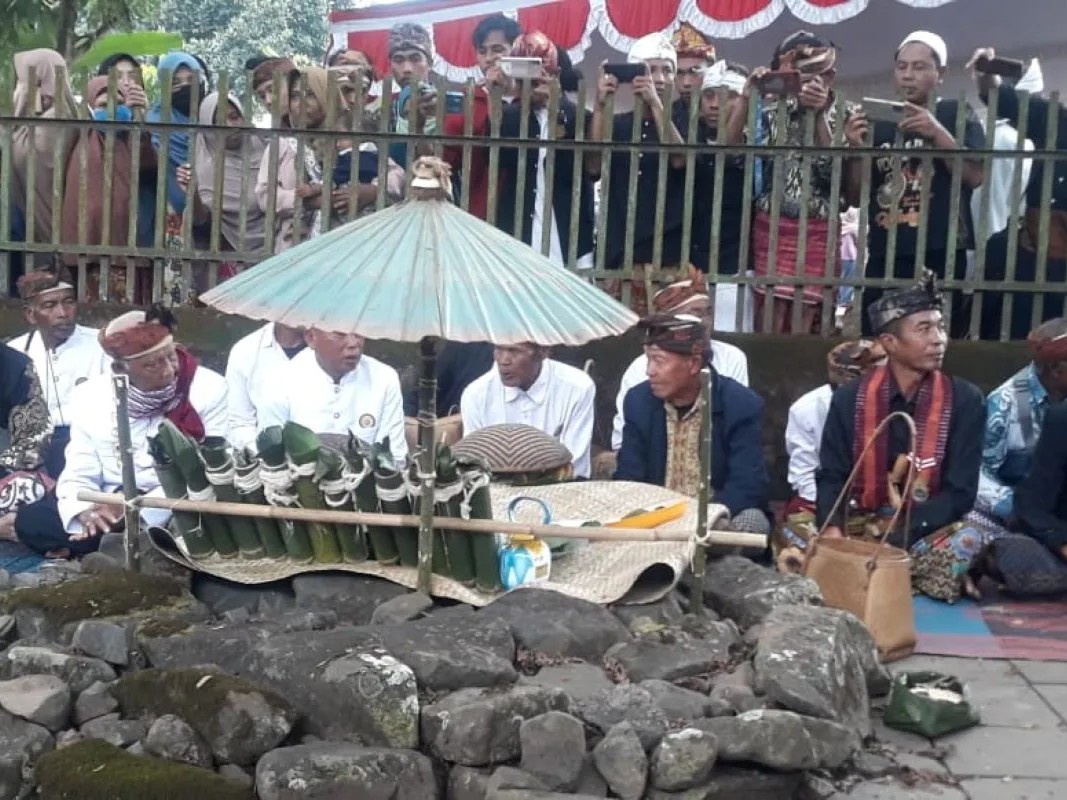
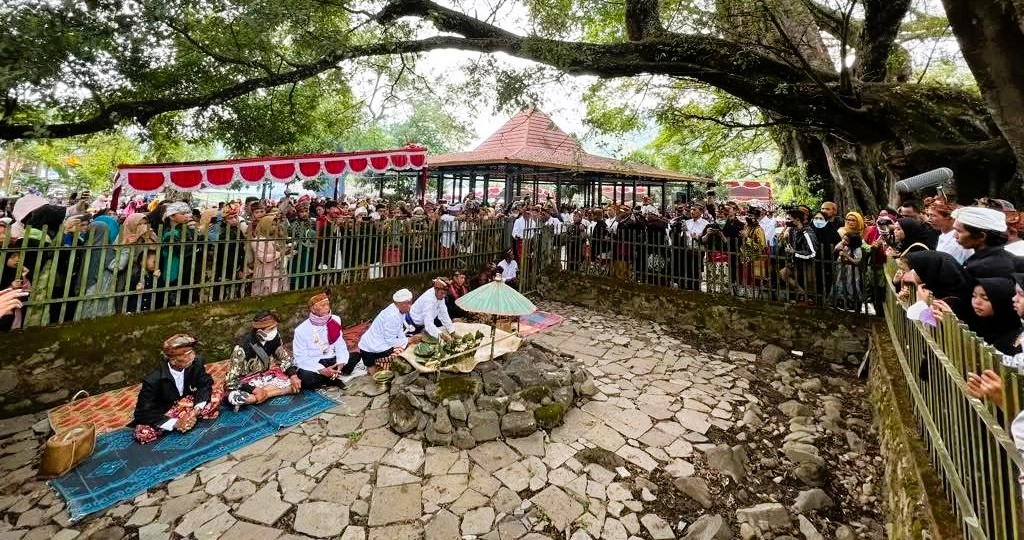
Once the excitement dies down, the groups proceed to a nearby gravesite behind the field. Makam Berugaq Reban Bande is a fenced grave, believed to be the burial place of a wise man who is revered in the village.
The group bearing the offerings and containers of holy water circle the grave nine times to the sound of gamelan music and chanting. The elders take their place inside the fenced area and perform the ritual, placing the offerings and the containers of sacred water on the stones that mark the grave and form an ancient altar.
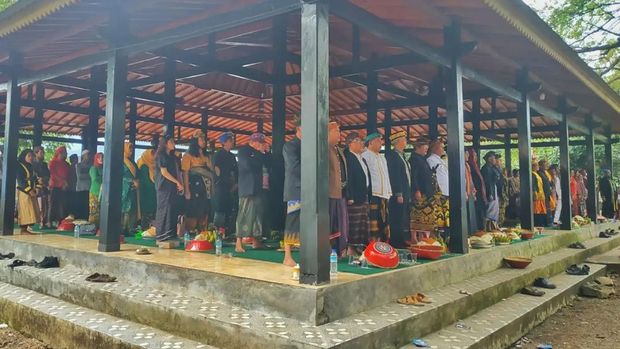
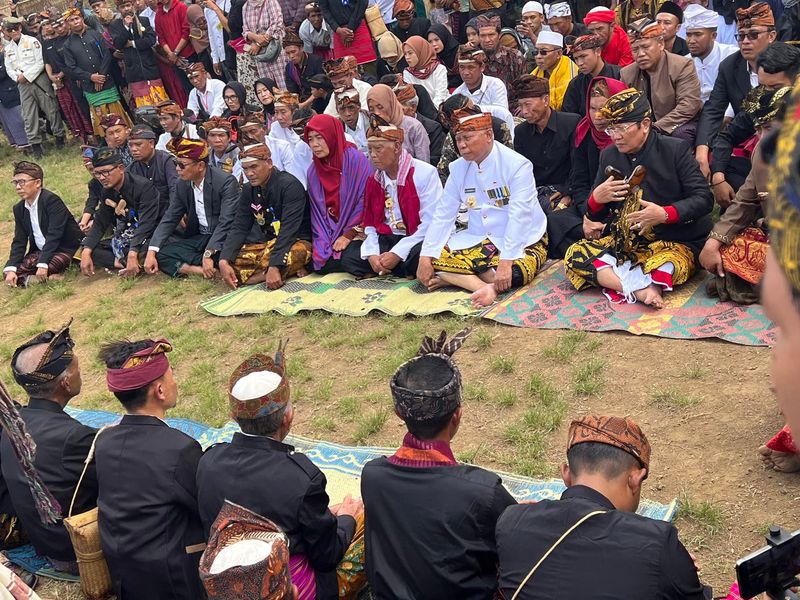
They are praying for a successful planting and growing season, freedom from pests, balance with nature; as well as fertility and prosperity for the whole community.
On a deeper level, this is a Pagar Gumi ritual, symbolising the relationship between human beings, between man and God, living beings and the universe.
Earlier in the day, black buffalo, cows and chickens have been sacrificed and the buffalo head is buried near the grave, to bring fertility to the land. After the holy part of the proceedings have finished, everyone receives food prepared from the cooked animals and spends the rest of the day having fun.
There are dances in the evening, as well as traditional music and cultural performances. The highlight is a theatrical performance that tells the story of Cupak and Gerantang, two brothers who fight to rescue a princess from an evil giant who has kidnapped her. The legend represents the battle between good and evil and is a lesson in greed, manners and human nature.
Spellbound, the audience watches under a sky filled with thousands of stars. Outside, darkness is lit by flaming torches and the throb of the big drums resonates across the valleys. It could be 2013, or some time from a distant and magical past, when man and nature lived in harmony with the Gods…