LOMBOK’S ICONIC LUMBUNG
Lombok’s unique ‘Lumbung’ architecture, with its distinctive rounded and arched roof, has become one of the most recognisable symbols of the island.
The word Lumbung, in the indigenous Sasak language, generally refers to a ‘rice barn’ – the thatched roofed building where sheaves of harvested rice are stored for future use.
Newly harvested and properly dried sheaves of rice will last up to a year in these barns.
In the past, each village would have originally had its’ own Lumbung, some of which would be communal, while larger land owners would have their own private rice barns.
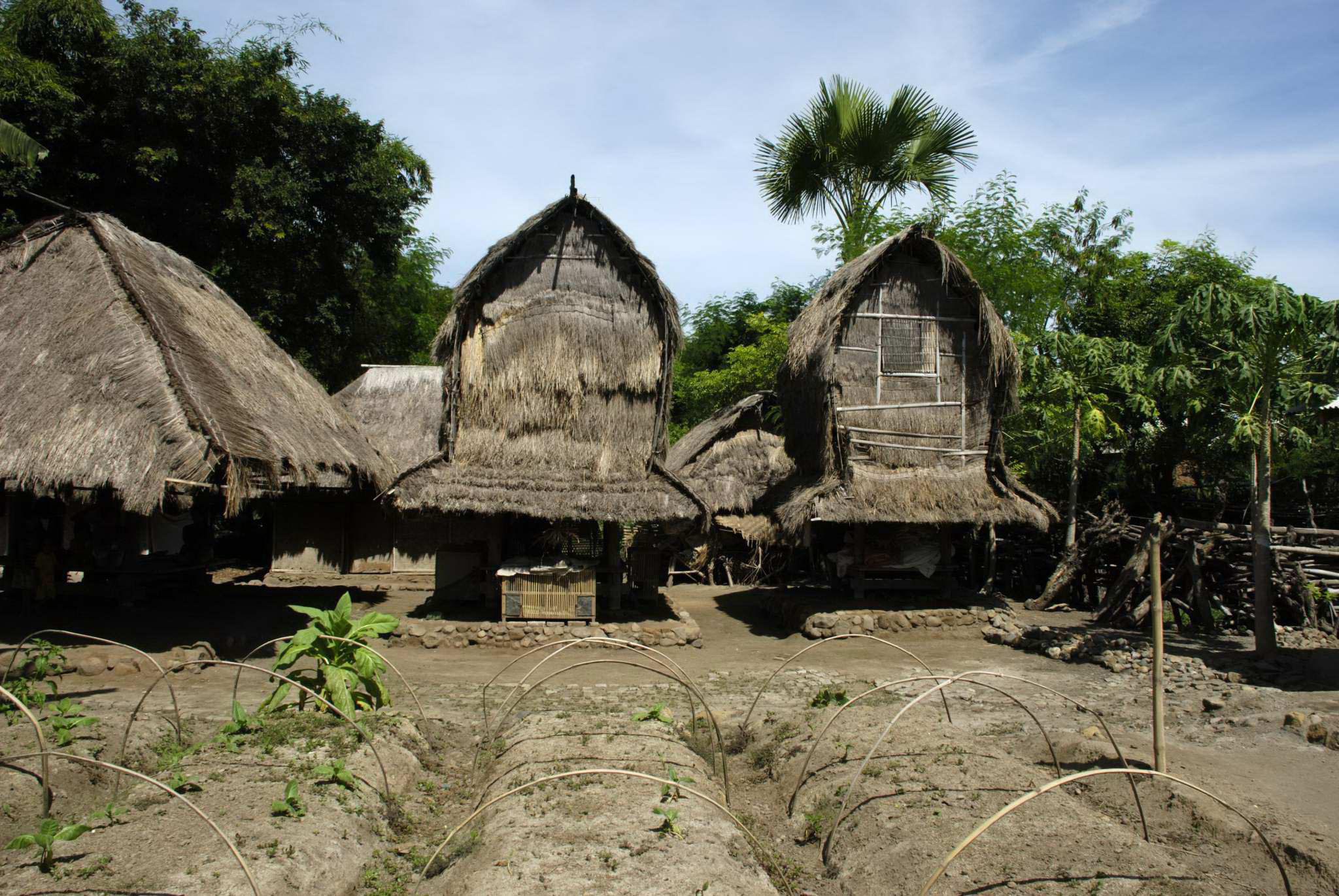
The main feature of this structure is the four main support posts around which the barn is constructed. They are smooth, round and polished hardwood columns designed to prevent animals – mainly domestic cats, mice, rats, snakes and lizards – from climbing up into the barn above and nesting in and/or eating the rice.
Despite this precaution, some acrobatic rodents do manage to get in occasionally!
The bottom part of the barn is an open sided area supported by the polished columns, with a wooden or bamboo floored communal sitting area some 50 centimetres off the ground.
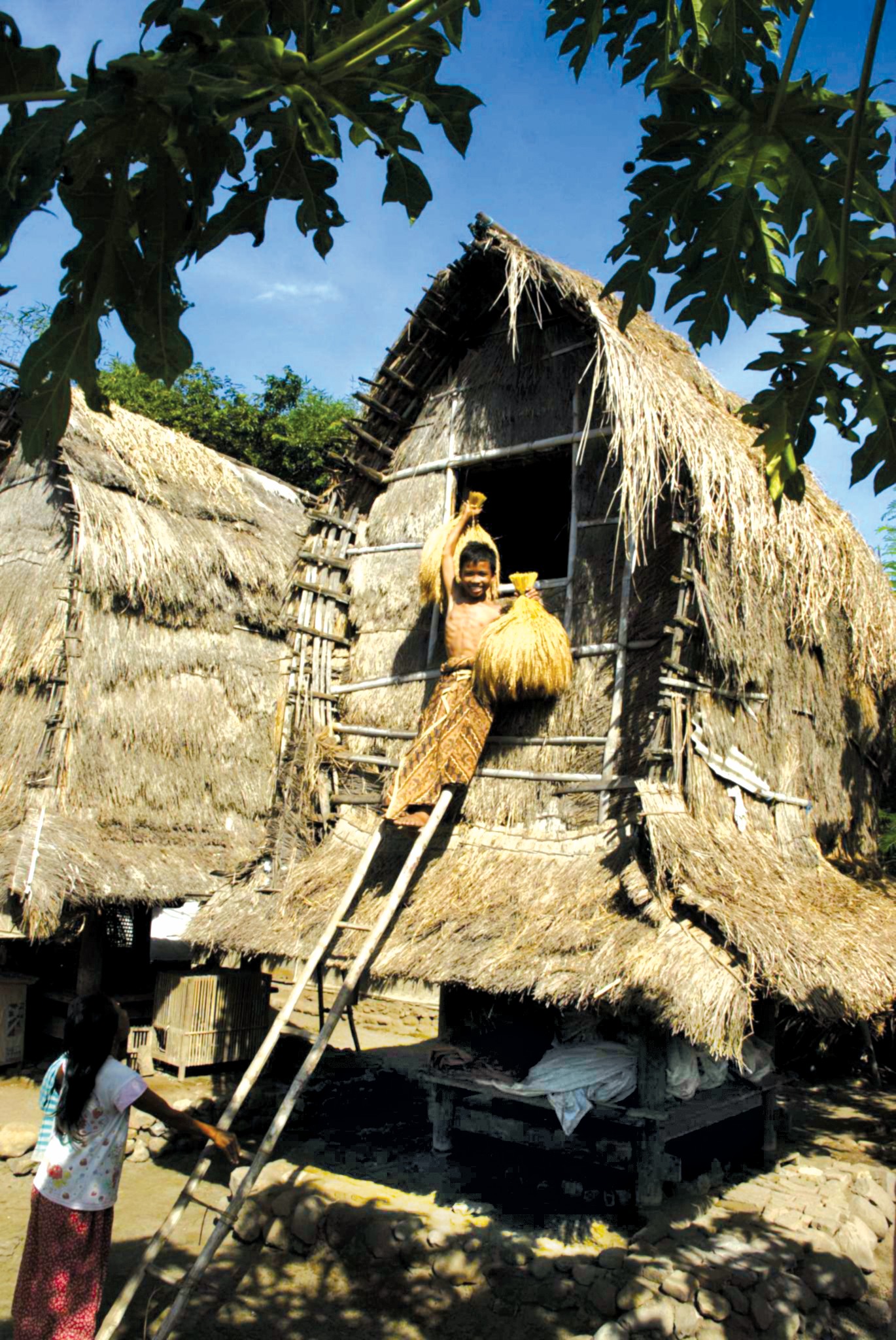
Above that, about a metre and a half above the ground, is the storage part of the structure sheathed tightly with alang alang grass; a type of sturdy grass used mainly for roofing.
The only access to the barn is a small opening in the side entered via a bamboo ladder which is removed after use. The opening is closed with a tight fitting shutter of woven bamboo, ensuring that bats and birds, including domestic fowl, do not make their homes in among the sheaves of rice.
The barn is topped with a steeply arched roof, again of many layers of the long alang alang grass, to ensure it is waterproof and that the heavy tropical rains run straight down the sides of the barn to the ground, giving it little chance to soak through to damage the stored rice.
Rice has been grown in this region for over 10,000 years, and no knows when the first rice barn was built, though it is fair to speculate that they must have been around for many hundreds of years – if not a few thousand – in one form or another.
Unfortunately these buildings are getting rarer, many falling into disrepair as the years go by. This is due to a number of reasons; one being the cost of repairs or replacing them. They are also are becoming redundant as more modern methods of processing and storing rice have been introduced.
These days, mobile rice de-husking machines travel from village to village in the harvesting season. They leave behind them sacks of polished white rice, which require very little room for storage compared to the bulky sheaves of cut rice stalks. Some of the rice is now sold directly to third parties and sent straight to the larger, modern industrial storage facilities.
It is sad to see these iconic buildings become victims of progress, slowly disappearing.
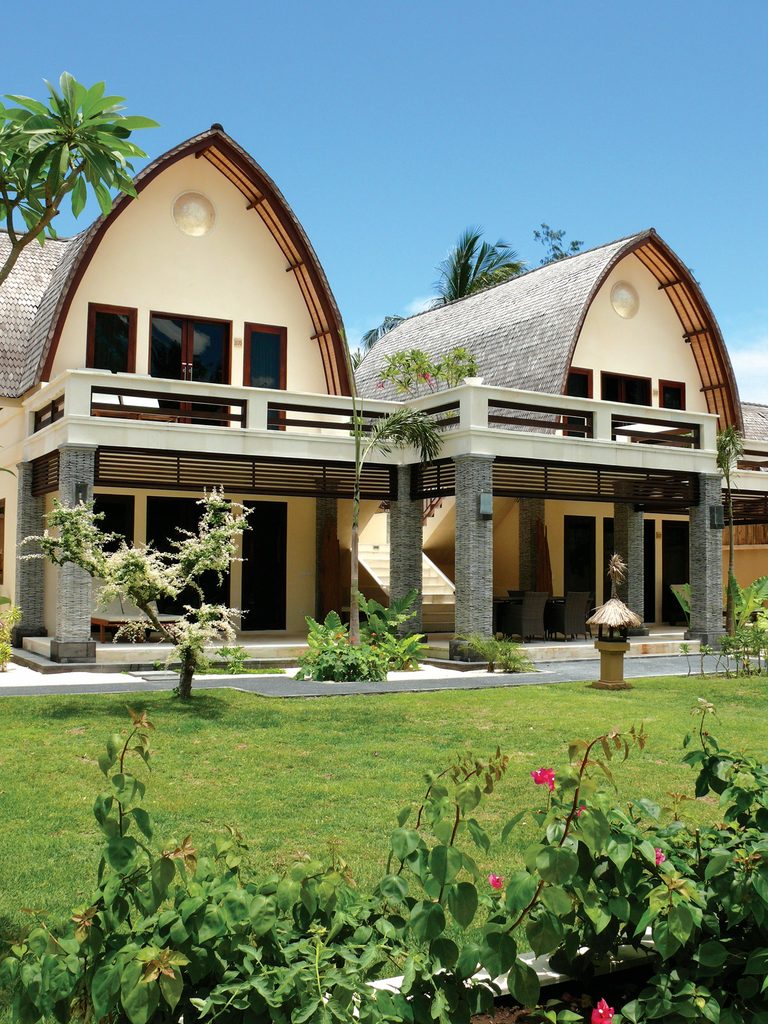
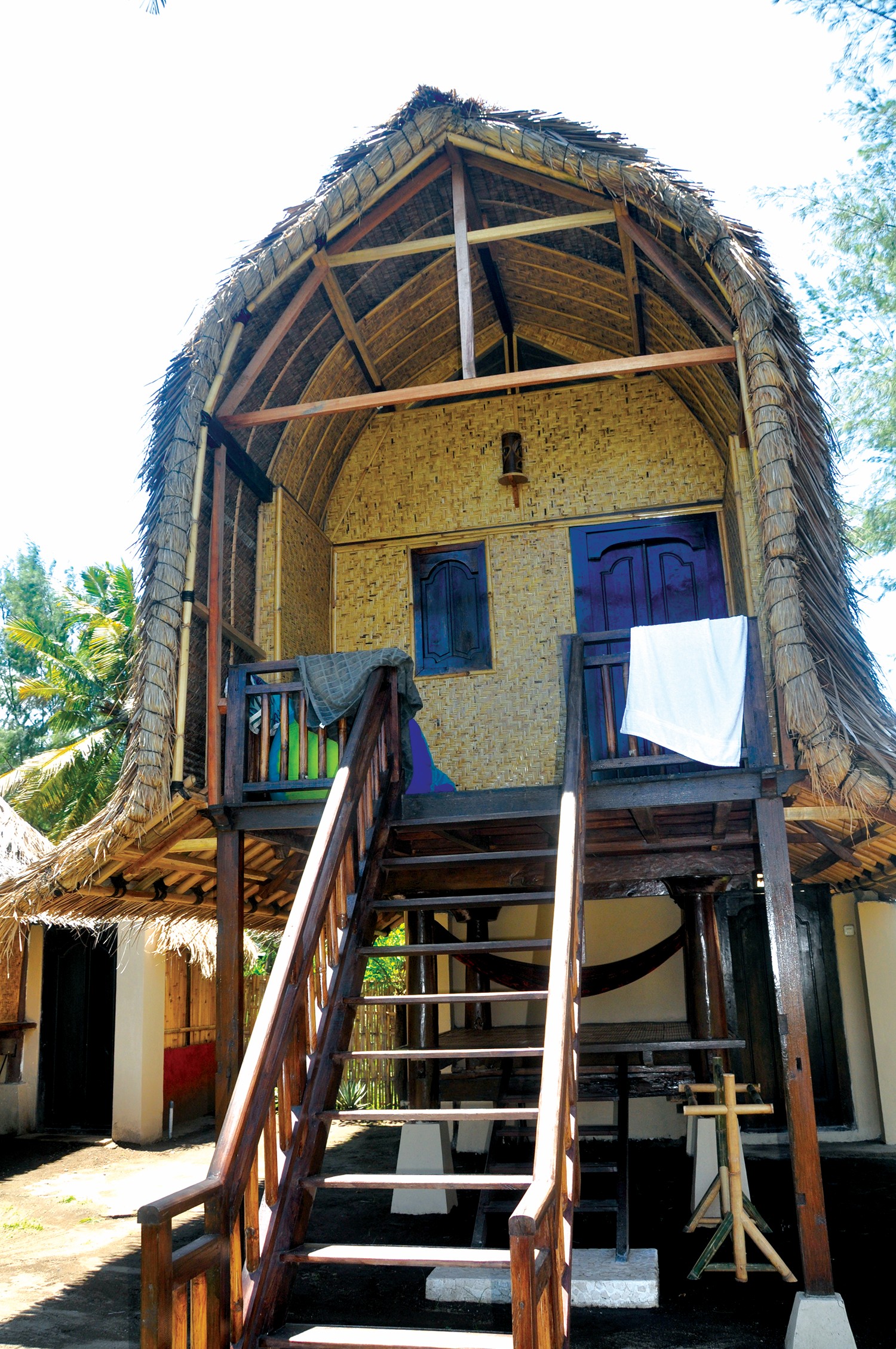
However, the distinctive shape of the Lumbung has become a popular symbol of Lombok and the heritage is being carried on in the construction of tourist accommodation.
The high arched ceilings of the upper floor create airy bedrooms, while the covered space underneath is ideal for seating, lounging areas or even a hammock!