WHEN KINGS WALKED THE LAND…
The city of Cakranegara was once called Singosari – a bustling and prosperous kingdom and the seat of power in Lombok.
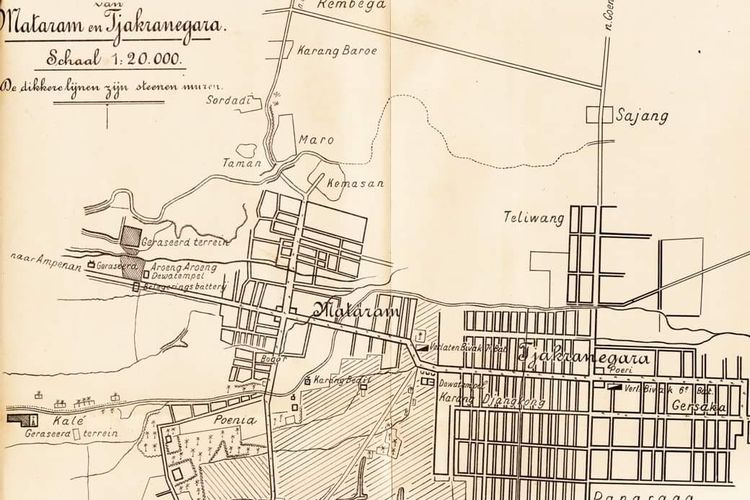
Wide straight roads (now Jl Langko and Jl Pejanggik) led from the port city of Ampenan to Mataram, the former seat of power, through to the royal palace compound at Cakranegara.
In the 19th century, Dutch colonial authorities called Mataram “The Paris of the East”. This nickname was given in admiration of the city’s architectural elegance, its beautiful gardens, and its role as a cultural and political centre in the region at the time.
It was meant to evoke images of European sophistication, in contrast to other areas of the Indonesian archipelago that were seen as less developed by the colonisers.
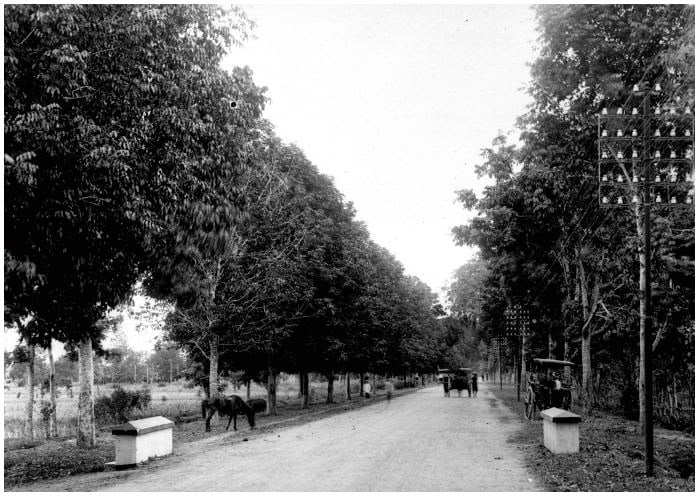
In front of Mataram Palace there used to be a beautiful Royal Garden (Kebon Raja) – now part of the NTB Governor’s Office – during the reign of the Mataram Kingdom.
On the other hand, Cakranegara was among a very few urban cities in the world that was designed properly and the city is famous among graduate students of civil engineering and architecture for its spatial layout.
The Karangasem rulers who built Cakranegara in the mid-18th century designed it as a planned royal city (Kota Kerajaan), inspired by Balinese urban principles and the Hindu concept of kuta negara, aiming to achieve cosmological balance.
The city was designed with a regular grid pattern, laid out in blocks of settlements, and incorporating elements such as temples, markets, residential blocks, and road networks.
Part of the design of the cities involved securing strategic roads leading to the palace.
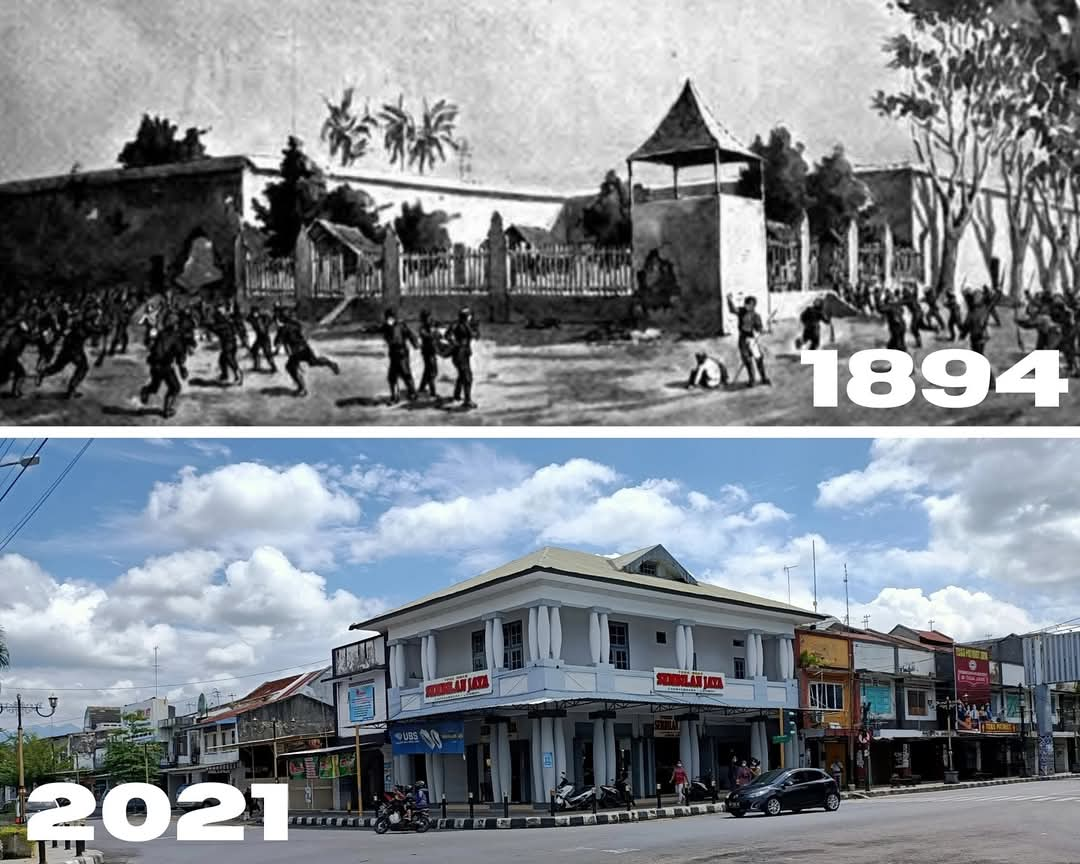
Jalan Pejanggik, which was the main road leading to the royal complex, was considered sacred and strategic. To guard the approach to the palace, each city block or junction had a small watchtower or guard post (bale penjagaan or pos jaga).
These watchtowers, usually manned by royal guards (known as prajurit), functioned as lookouts, checkpoints, and status markers – projecting royal authority and blocking unwanted access to the cities, which would come to play an important role in the future.
The Palace
Puri Cakranegara, also known as Puri Ukir Kawi, was the royal palace complex, constructed in the mid-19th century by the Karangasem Kingdom. After the seat of power moved from Mataram to Cakranegara, it served as the residence of the last king of Karangasem in Lombok, Anak Agung Gede Ngurah Karangasem, together with his family and courtiers.
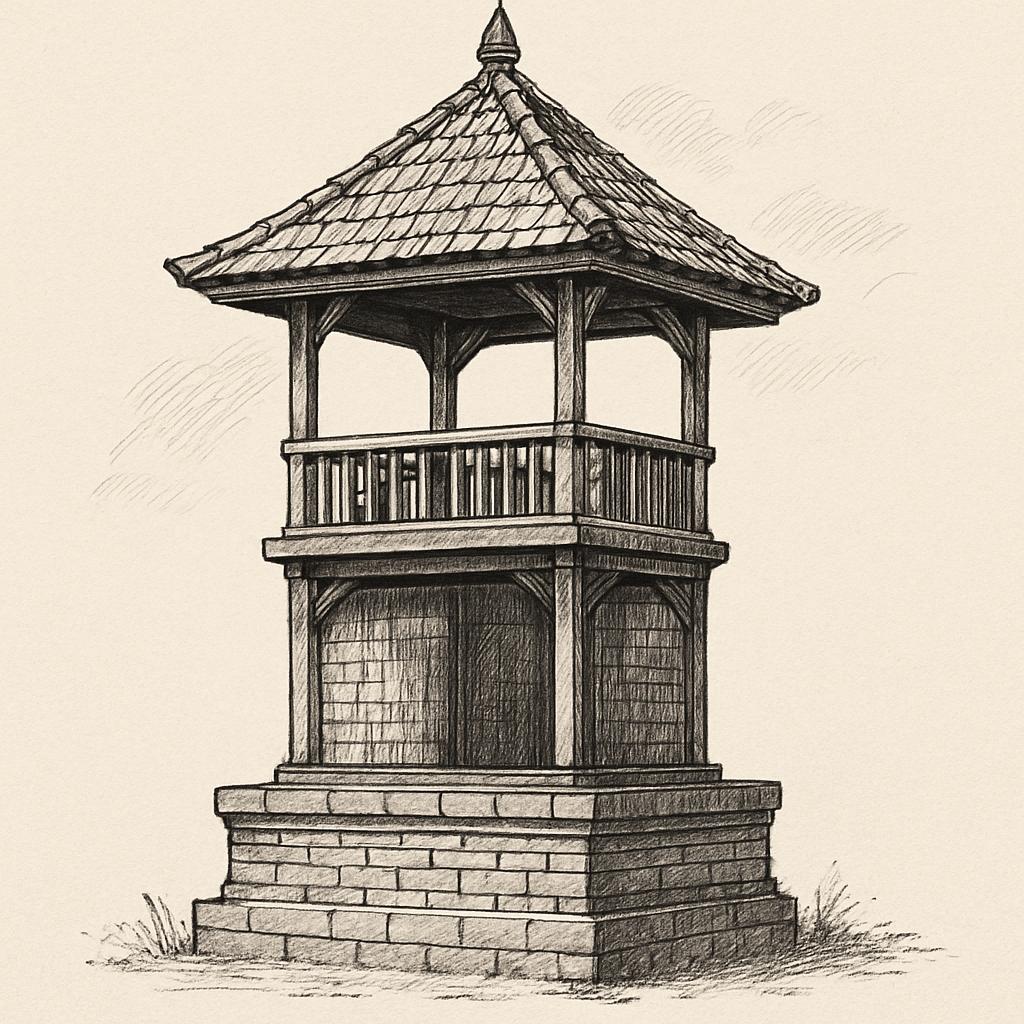
The palace complex extended approximately from the modern-day intersection of Jl Pejanggik and Jl Selaparang to just before Taman Mayura to the south, and near Jl Sriwijaya to the east. A watchtower stood at the intersection, where the Sembilan Jaya gold shop stands today.
The palace compound was surrounded by fortified brick walls, said to be 5m high and 1.5m wide. Dr Julius Karel Jacobs, a Dutch colonial physician, recounted in his 1883 writings that Puri Ukir Kawi was very large and it took 30 minutes to walk around its walls.
“The building looks very magnificent, with a wide field in front of it,” he wrote. “At night, the palace and the surrounding streets are bathed in lantern light, creating an extraordinary impression. People will feel like they are in a city in Europe.”
Within the compound was the king’s residence, known as Ukir Kawi, together with separate residences for princes and the king’s wives, walled courtyards containing open-air pavilions (bale) for ceremonies and meetings, and temples and shrines, and more.
The urban layout around the palace was highly organized and hierarchical, reflecting the social structure of Balinese society, which was influenced by Hindu-Balinese caste systems.
Radiating outward from the palace were zones of residential areas: the first zone reserved exclusively for the Balinese-Hindu priest caste or Brahman, who held significant spiritual and ritual authority in Balinese Hindu society. Their proximity to the palace reflects their important role in performing religious ceremonies for the royal family and ensuring that spiritual guidance was close to the heart of the political power.
The next tier in the city was home to the elite castes, primarily the Kshatriya (warrior and noble class) and Vaishya (merchant and agricultural class). These groups had important social roles and wealth, with Kshatriyas often holding political and military positions, while Vaishyas were involved in commerce and trade.
Further out, the various layers reflected the status of the residents and formed the bulk of Lombok common society: farmers, craftsmen, and workers.
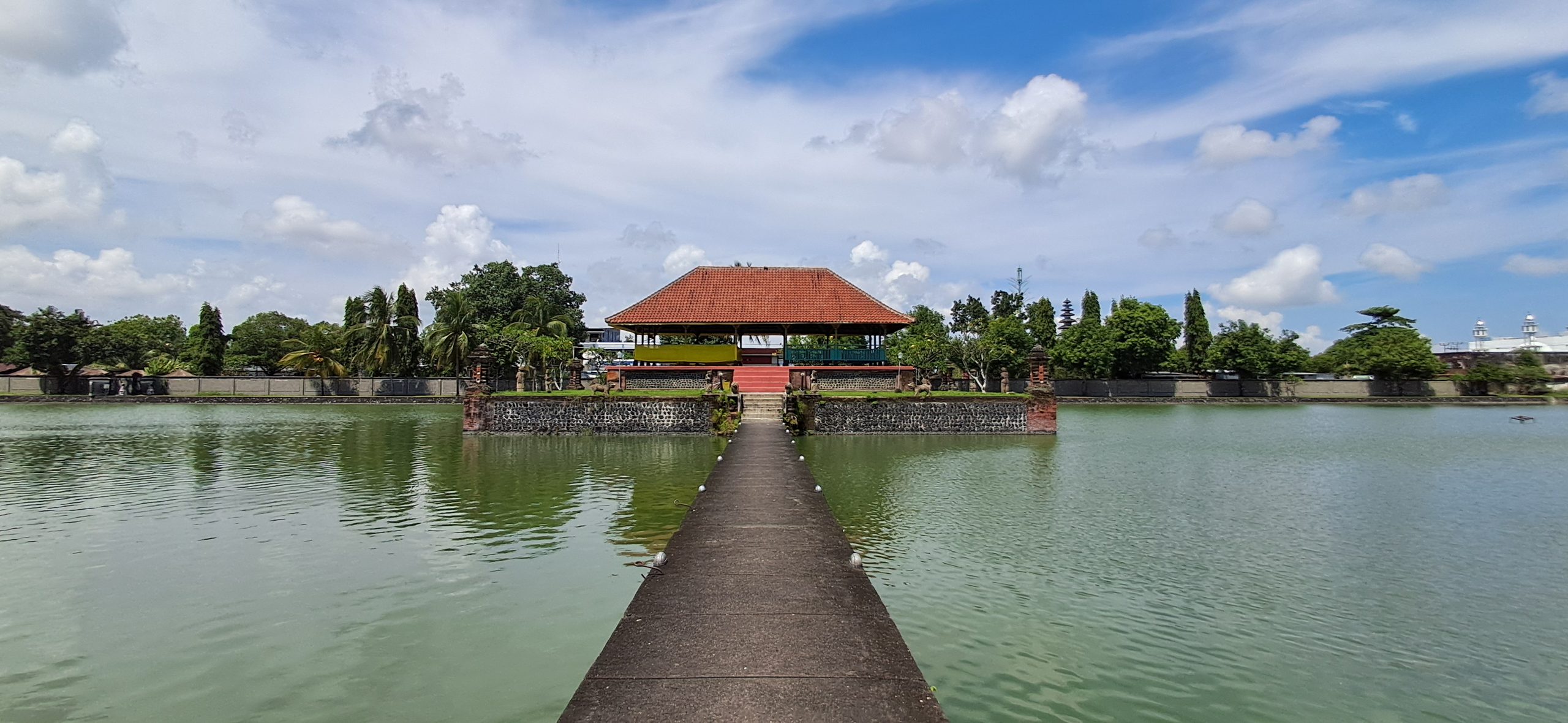
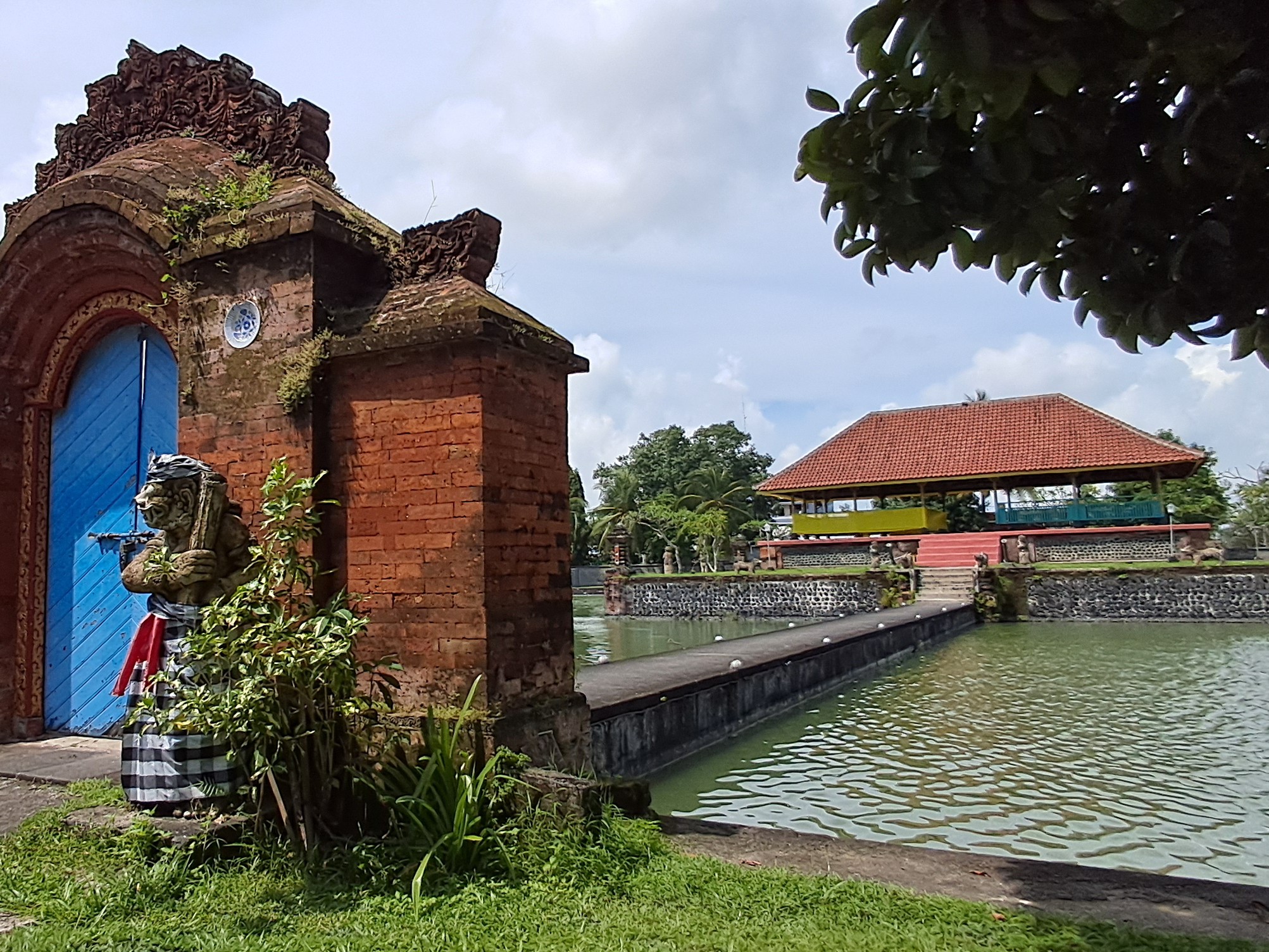
Across from the palace compound stood Mayura Park (Taman Mayura), which was built in 1744 and was part of the extended royal grounds but not within the palace complex itself.
Taman Mayura is made up of sprawling gardens surrounding a central lake upon which stands a pavilion (Bale Kambang) which was used for royal meetings, court sessions, and religious rituals.
The garden was open to the public during ceremonies and had no perimeter wall, like the inner palace.
Surrounding the lake were lush gardens and pavilions, creating a serene environment for both royal leisure and public gatherings. The complex also includes two bale or meeting rooms and two Hindu temples, and remains a significant cultural site today.
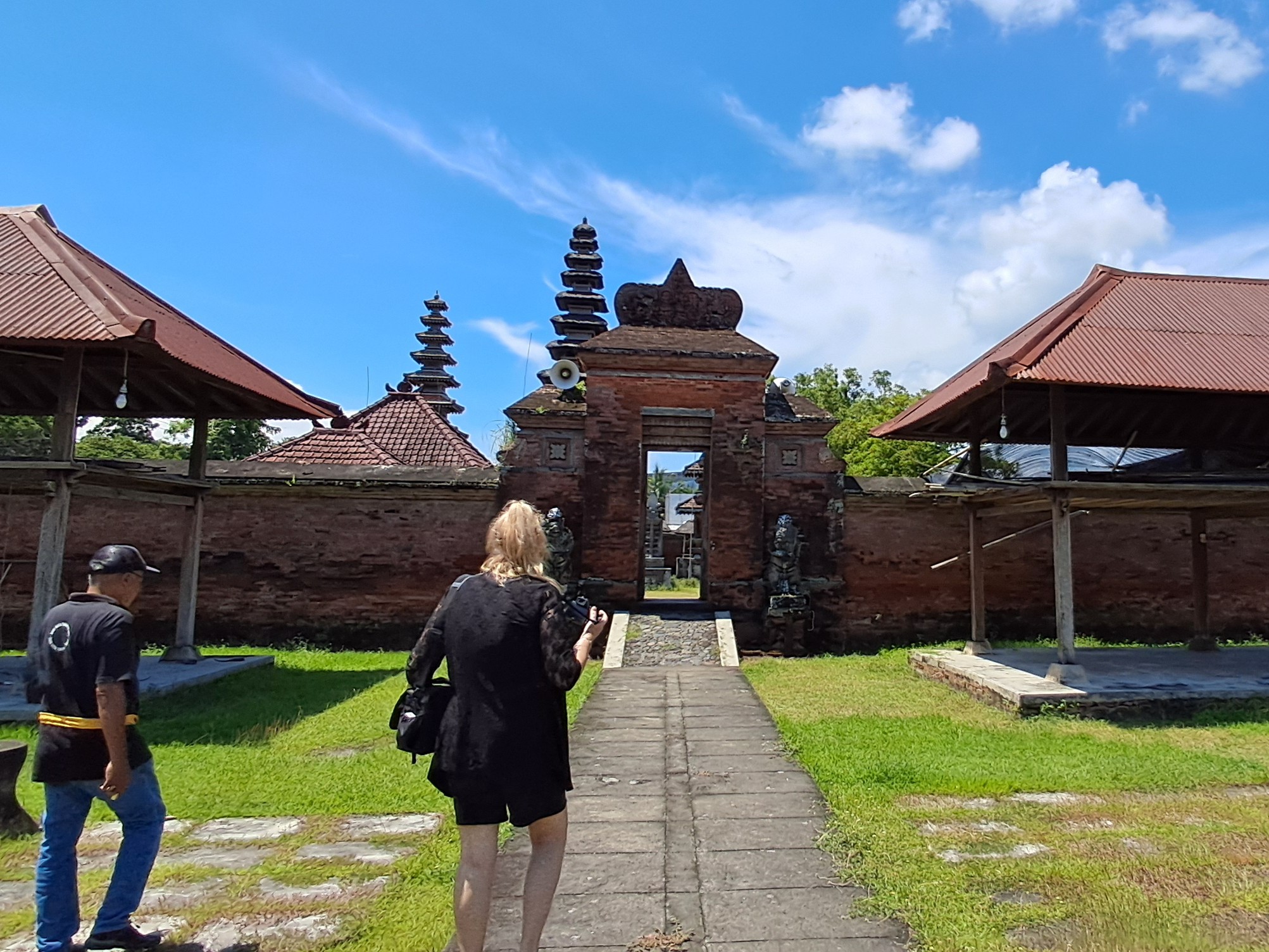
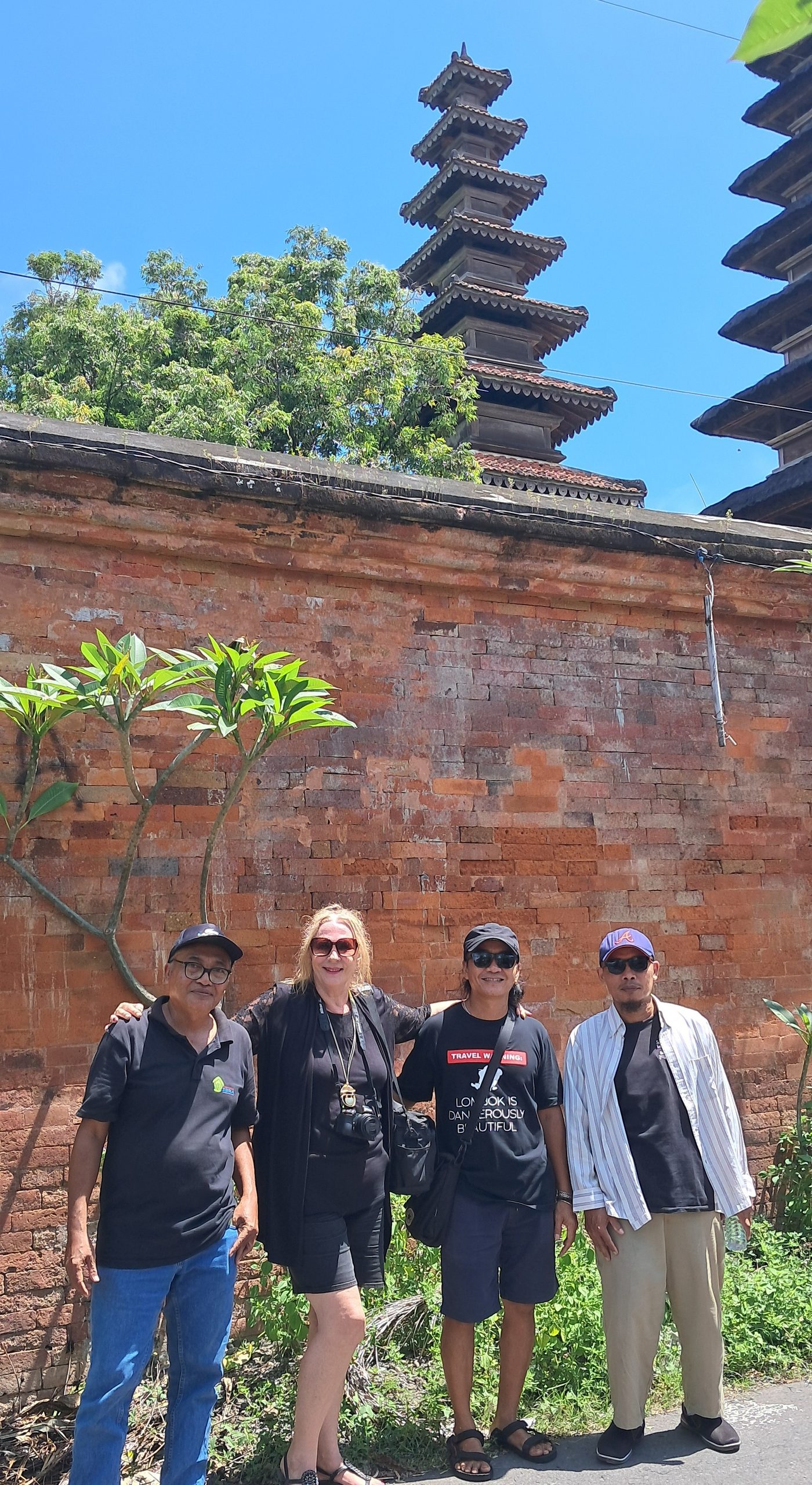
Adjacent to Mayura Park is another important Hindu spiritual site called Pura Meru.
Pura Meru, built in 1720 by the Balinese kingdom of Karangasem, pre-dates Puri Cakranegara by more than a hundred years. It was constructed to serve the Balinese Hindu community in the region.
While Pura Meru is closely linked to the Cakranegara royal complex and supported by the royal family, it was always a public religious site and outside of the fortified palace compound.
Balinese Rule in Lombok
It is only natural that Lombok’s history is so intertwined with Balinese history. The distance from Bali’s east coast to Lombok’s west coast, as the crow flies, is roughly 40 kilometres (about 25 miles) across the Lombok Strait.
By the early 1700’s Balinese settlers from the Karangasem Kingdom in eastern Bali began establishing influence in western and central Lombok. Initially, this was through trade and diplomacy.
Before this time, Lombok was made up of numerous competing and feuding states, each of which was presided over by a Sasak ‘prince’. This disunity was taken advantage of by the neighbouring Balinese who sought control of Lombok in the early seventeenth century.
In the early historical era of the Majapahit Empire (1293 -1500s), Lombok was divided into two geographical and cultural areas: Lombok Mirah (West Lombok) and Sasak Adi (East Lombok).
In the era of the Mataram and Cakranegara Kingdoms, Lombok was known by Barat Juring (West Lombok) and Timur Juring (East Lombok): two different geographical and administrative regions on the island.
Between 1740 and 1750, the Karangasem Kingdom launched military campaigns to conquer parts of Lombok, eventually establishing direct rule over several regions in West Lombok. This led to the formation of Balinese kingdoms on the island, notably in Mataram and Cakranegara.
By the late 1700s and early 1800s, Balinese rule in Lombok became firmly established, particularly in the western regions, while the indigenous Sasak people (the original inhabitants of Lombok) retained control of parts of the east.
The relationship between the Balinese rulers and the Sasak people in Lombok was complex, marked by coexistence, conflict, and cultural blending over nearly two centuries.
There was frequent conflict, but also cultural integration – Balinese Hindu culture blended with local Sasak customs.
Eventually, however, the conflict would bubble over, resulting in the cataclysmic destruction of the Balinese kingdoms in Lombok and wiping out the kings forever.
To be continued …/
CAKRANEGARA WALKING TOUR
This article is only a brief summary of an important time in Lombok’s history – which in reality could fill many books!
In order to bring this era to life, we took a tour of Cakranegara with Lombok Heritage Society.
Lombok Heritage Science Society (LHSS), or more simply “Lombok Heritage” is a group of enthusiastic local people dedicated to preserving the history and culture of the island. Made up of students and historians, and people who simply love their island, the group are committed to highlighting the rich history of Lombok, which has been mostly uncelebrated until now.
Lombok Heritage offers guided walking tours to several places on the island, including Cakranegara and Ampenan, offering a fascinating glimpse into the past. The friendly and knowledgeable guides speak English and will guide you to the places of interest and explain the history behind them.