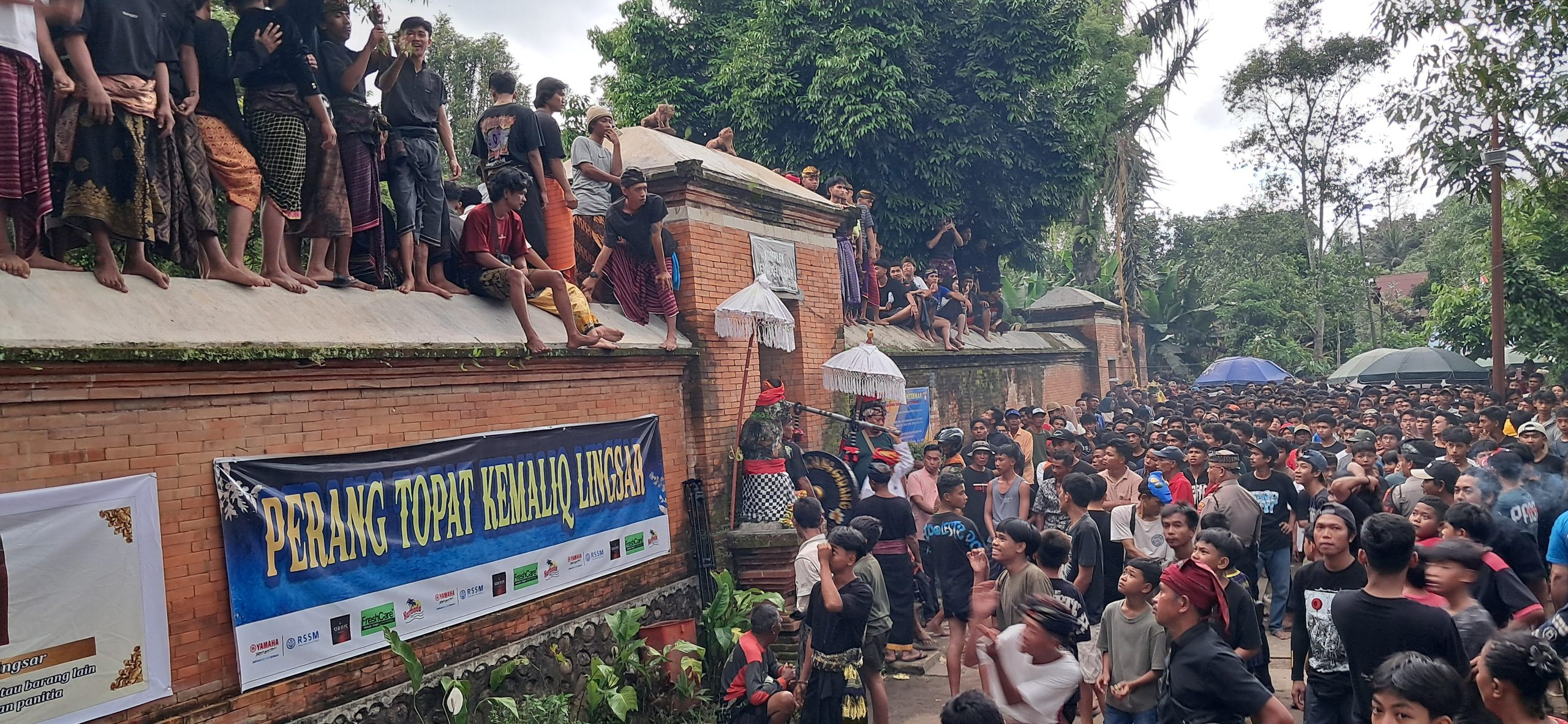
PERANG TOPAT… The Rice War!
Thousands of people attended Lombok’s unique “Perang Topat” held on Thursday, 4 December at historic Lingsar Temple in West Lombok.
Perang means “war”and Topat is short for “ketupat” – small diamond-shaped parcels of rice, which have been wrapped in woven coconut leaves and boiled – a delicious local alternative to ordinary rice.
In this friendly war, Hindus and Muslims stage a mock battle, hurling the topat at each other amidst much fun and laughter.
Built around 1759 and renovated in 1874, Pura Lingsar is located about 10km northwest of Mataram and is renowned for its unique temple complexes: the Gaduh Temple for Hindus and the Kemaliq Temple for Muslims.
The temple complex is considered sacred by both religions and is a historical symbol of tolerance between different cultures and beliefs, living side by side. It has been associated with fertility for centuries and is an important link to the island’s animist roots.
Pura Lingsar is the only temple on Lombok where Hindus and Muslims gather to worship and pray together and “Perang Topat” is celebrated nowhere else in the world.
The ritual of Perang Topat has been performed at Lingsar every year on the full moon in the seventh month of the Sasak calendar for hundreds of years, in a tradition that is passed down through the generations.
Officials at the event spoke about the importance of Perang Topat as an enduring tradition which celebrates the unity of people, without race, religion or other differences; and the ancient bonds between Sasak Muslim and Balinese Hindu communities in Lombok.
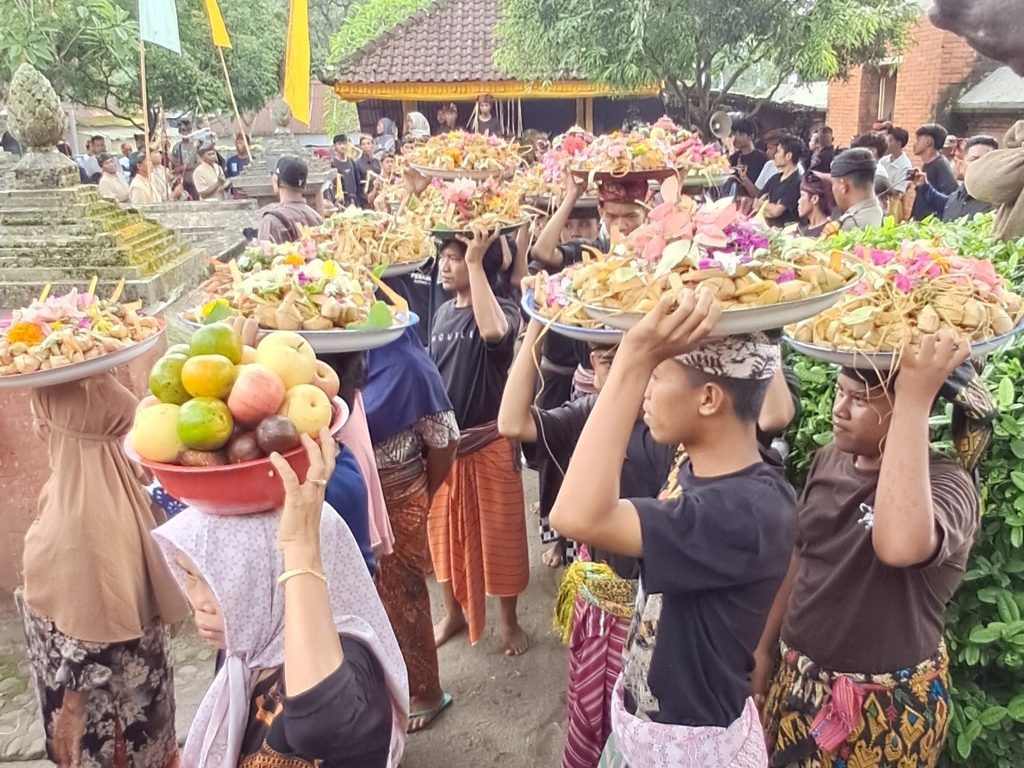
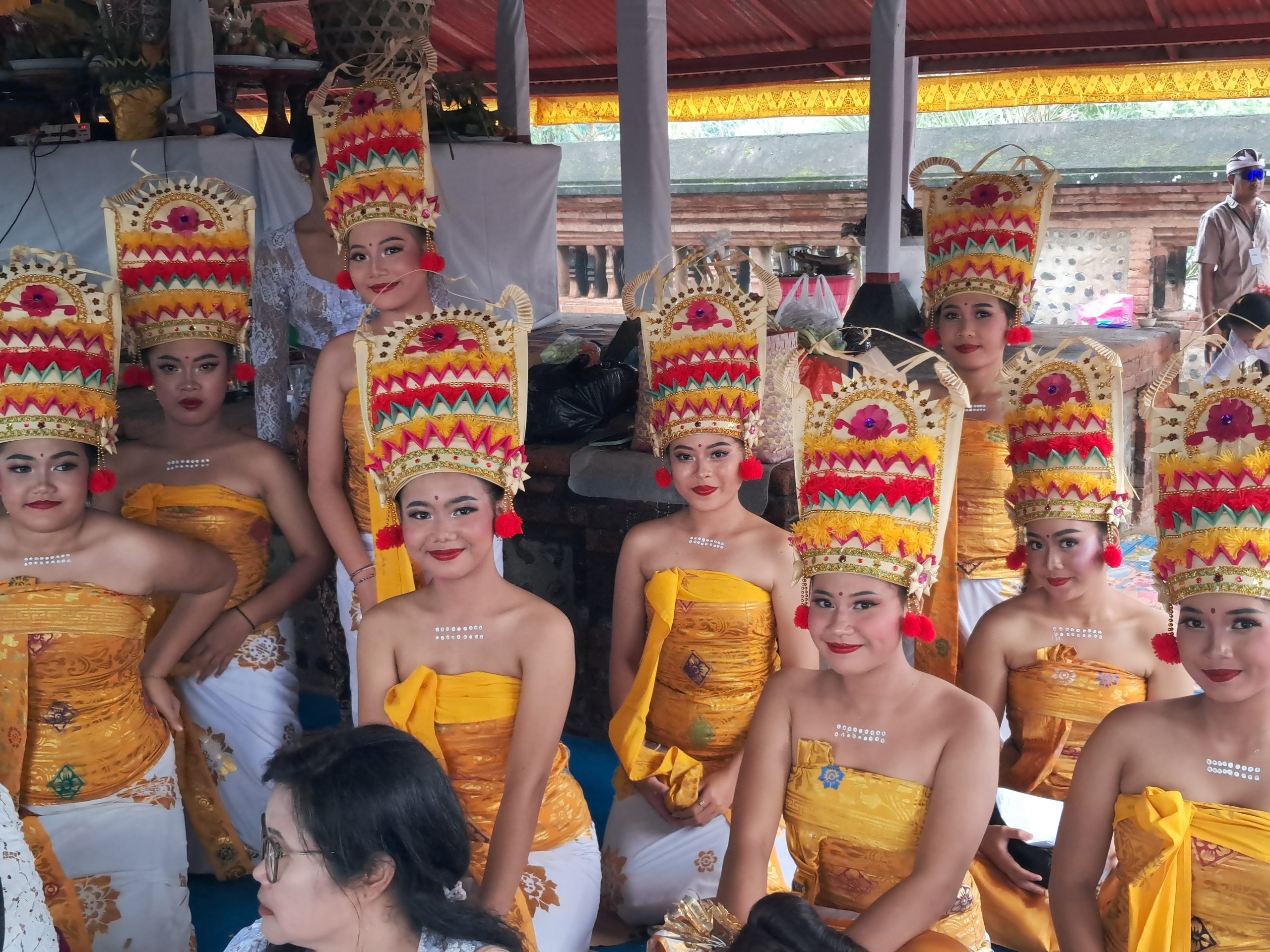
The ceremony starts with an elaborate parade – flowers, fruits, rice cakes and offerings of all colours and varieties are carried in colourful towers on the heads of the women, who are dressed in beautiful coloured kebayak (traditional lace blouses) and traditional Sasak dress.
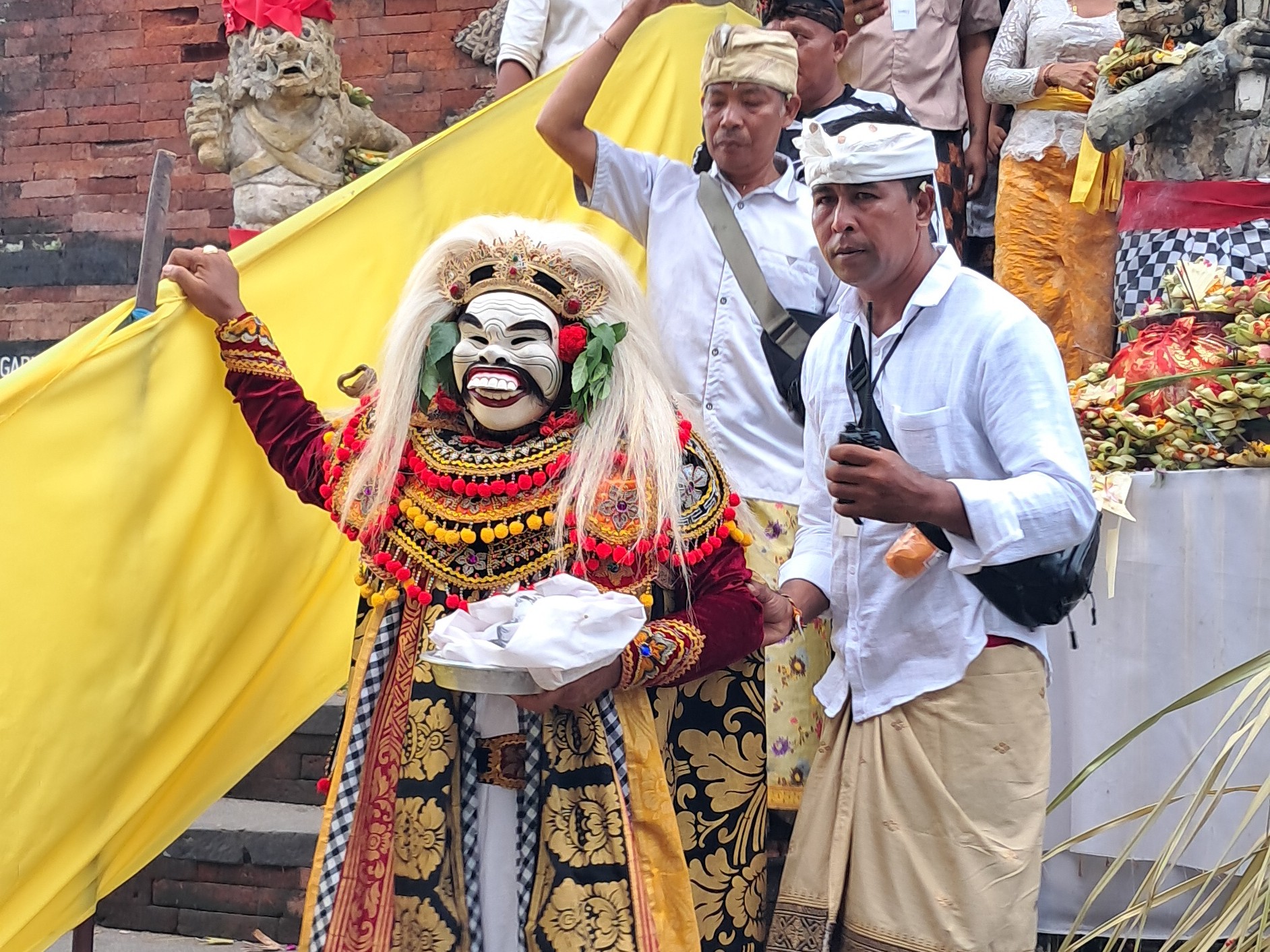
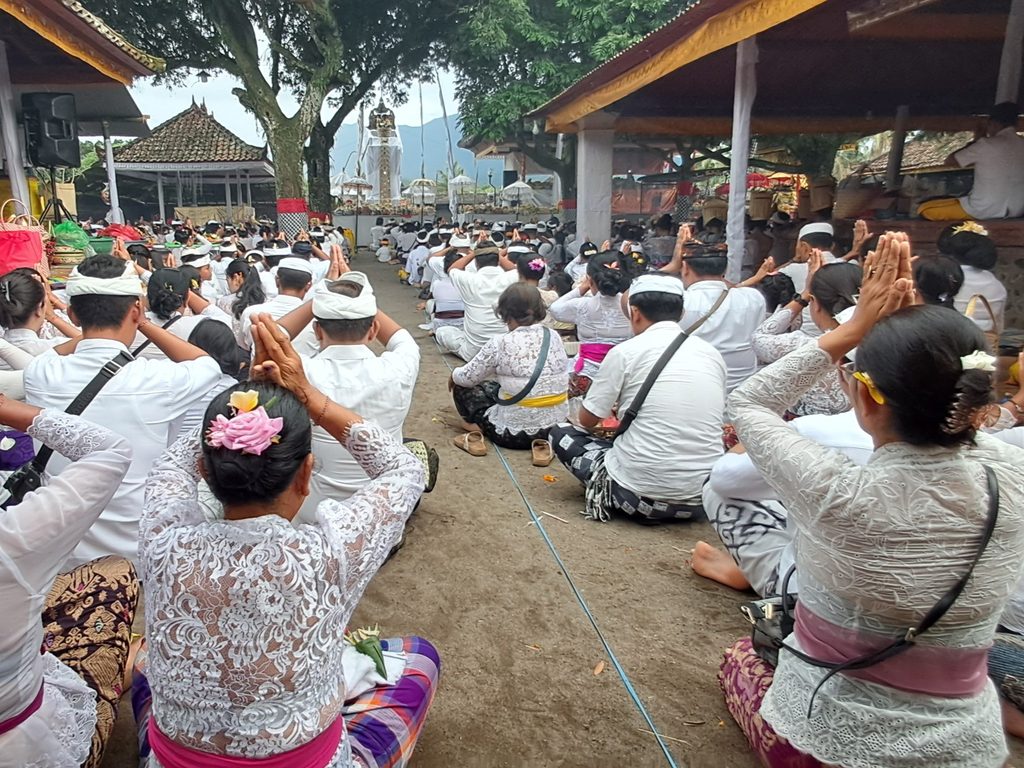
The rituals include prayers and chanting, and traditional music and dancing, after which the offerings are presented at both temples and blessed by priests.
Together, the people pray for fertility and prosperity, for good rains and a bountiful harvest; both literally and spiritually.
As the procession continues, hundreds of local residents and visitors wait in the Kemaliq yard for the topat to be distributed. The serious part of the ritual over, it is time for the mock rice war: Perang Topat.
The battle begins at 4 pm, a time known in Sasak community as rarak kembang waru (when the flowers of the hibiscus trees begin to fall).
Tall bamboo poles with the woven rice parcels tied to them are shaken and the topat that fall are gleefully grabbed up by the crowd. Offerings are raided, and others pull hidden topat from their clothes. Two sides are drawn as everyone, adults and children alike, starts throwing the topat at each other.
It’s a hilarious sight, seeing everyone throwing the topat as far as they can into the opposing crowd and then scrabbling on the ground to snatch up the fallen topat, before someone else can grab it.
The air is filled with good-natured yells and laughter and, after the solemnity of the sacred ritual, it’s a good way to release the tension and bring the community together in a fun way.
The people believe that topat thrown at each other can bring blessings. After the battle, they collect the topat to plant in the rice fields, following local farmers’ belief that it makes the land more fertile. Some hang them on the eaves or roof of the house, believing the topat bring prosperity and wealth to the household.