REBO BUNTUNG…
Warding Off Bad Luck
It’s just after 7 o’clock in the morning and we are speeding across the smooth highway that connects the west of the island to the east.
As always when we travel this road, I am entranced by the passing scenery. We pass through cities bustling with activity, and then through small towns that look like throwbacks to the 1950’s.
This morning we are heading almost all the way to the east coast, to the town of Pringgabaya; around 2 hour’s drive from Senggigi.
Once a year this town, and the nearby beach at Tanjung Menangis, plays host to a unique Lombok tradition called Rebo Buntung. The ritual is called Mandi Safar in North Lombok and the Gilis.
Rebo Buntung (literally “cut off Wednesday” in the Sasak language) is held on the last Wednesday in the month of Safar, the second month in the Islamic calendar.
Many people believe the month of Safar is unlucky – a time of catastrophes and the spread of disease. On Rebo Buntung, local people in East Lombok will leave their houses and take part in the Tetulak Tamperan ritual.
Tetulak Tamperan (“tolak bala” in Bahasa Indonesia), roughly means to “ward off bad luck” and is a tradition unique to the Sasak people of Lombok.
During this time, the community will bathe at local wells and rivers, or in the sea; symbolically “cleaning” themselves of negative energies, and warding off potential disease and bad luck.
No one knows when the first of these rituals began but the tradition of Rebo Buntung is known to be many centuries old and pre-dates Islam on the island.
Turning off the main road at the bustling market in Pringgabaya, we make our way down a muddy dirt track to the beach at Tanjung Menangis. Already visitors from all around are starting to arrive and the track is crowded with people trailing children and picnic baskets; horse-carts, cars and trucks loaded with more people fill the tiny laneway.
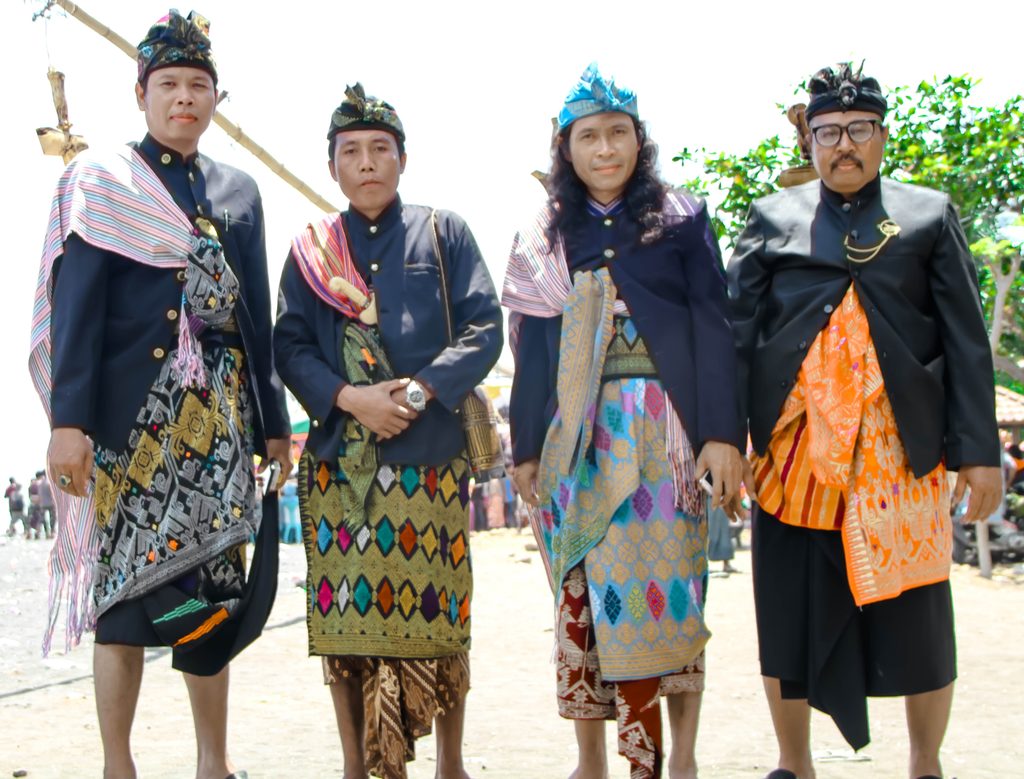
On the beachfront, hundreds of people are already gathered. Stalls selling snacks, toys and balloons are set up, ice cream vendors push their bikes through the sand, and there is an excited festival atmosphere.
We sit under the tents already filled with village leaders, government dignitaries, reporters and VIP guests, hoping the grey skies don’t open to pour down rain on the proceedings.
Soon there is the sound of traditional music – drums and cymbals and a type of angklung with two bamboo tubes, rarely seen at events on Lombok.
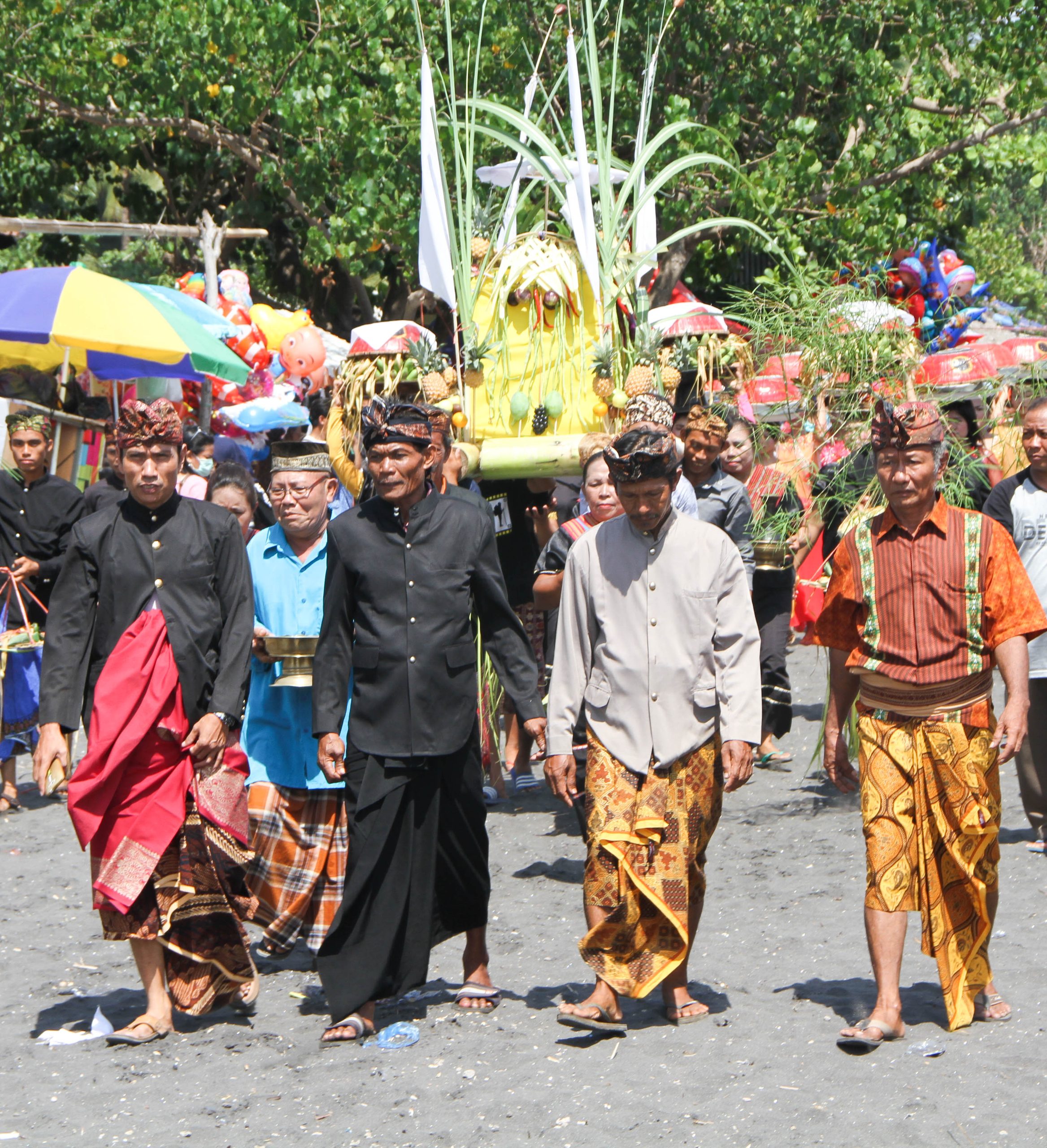
The musicians march in two rows, beating a rapid tempo to generate excitement. The procession follows, led by Sasak elders bearing offerings; the most important of which is a buffalo head on a covered tray.
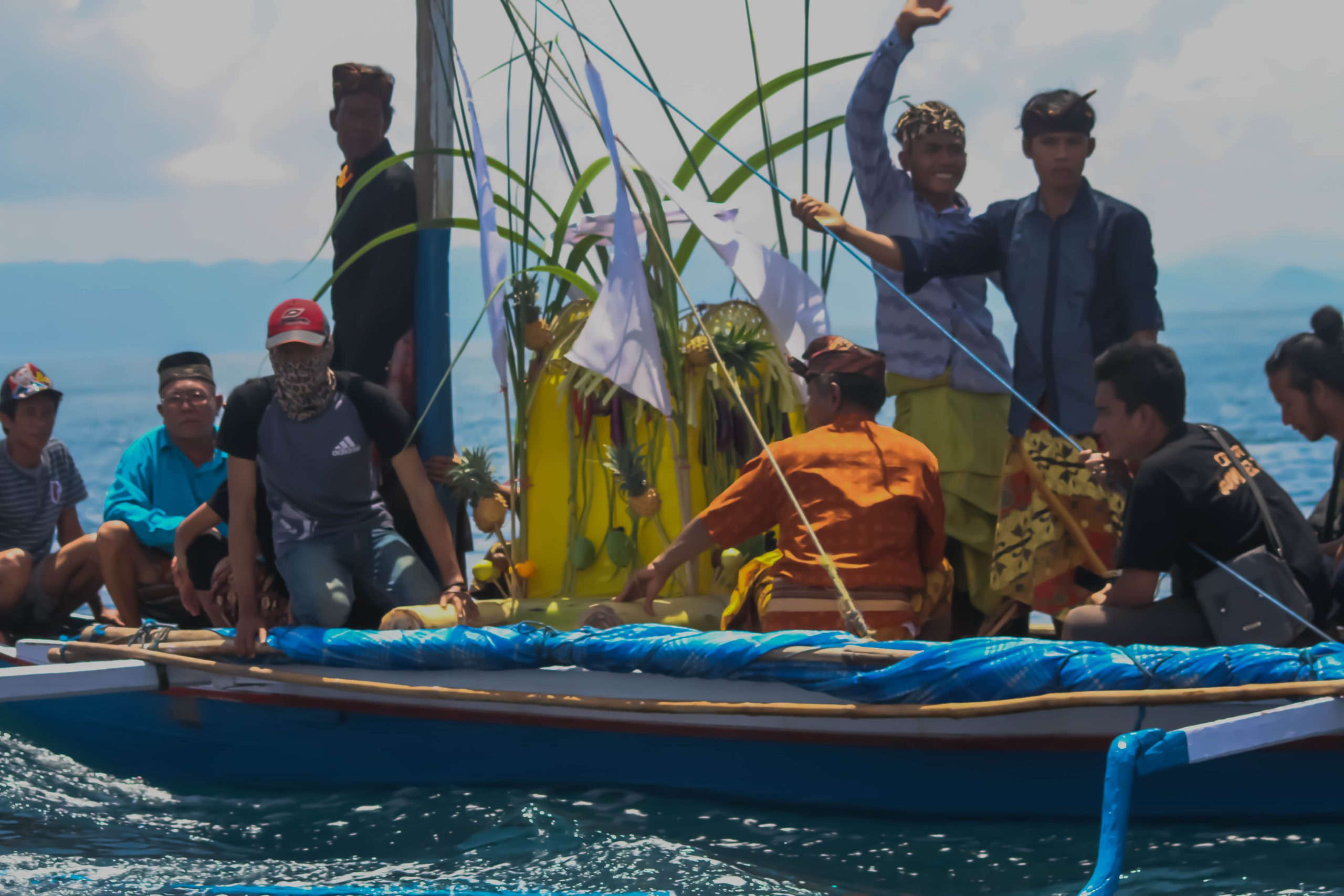
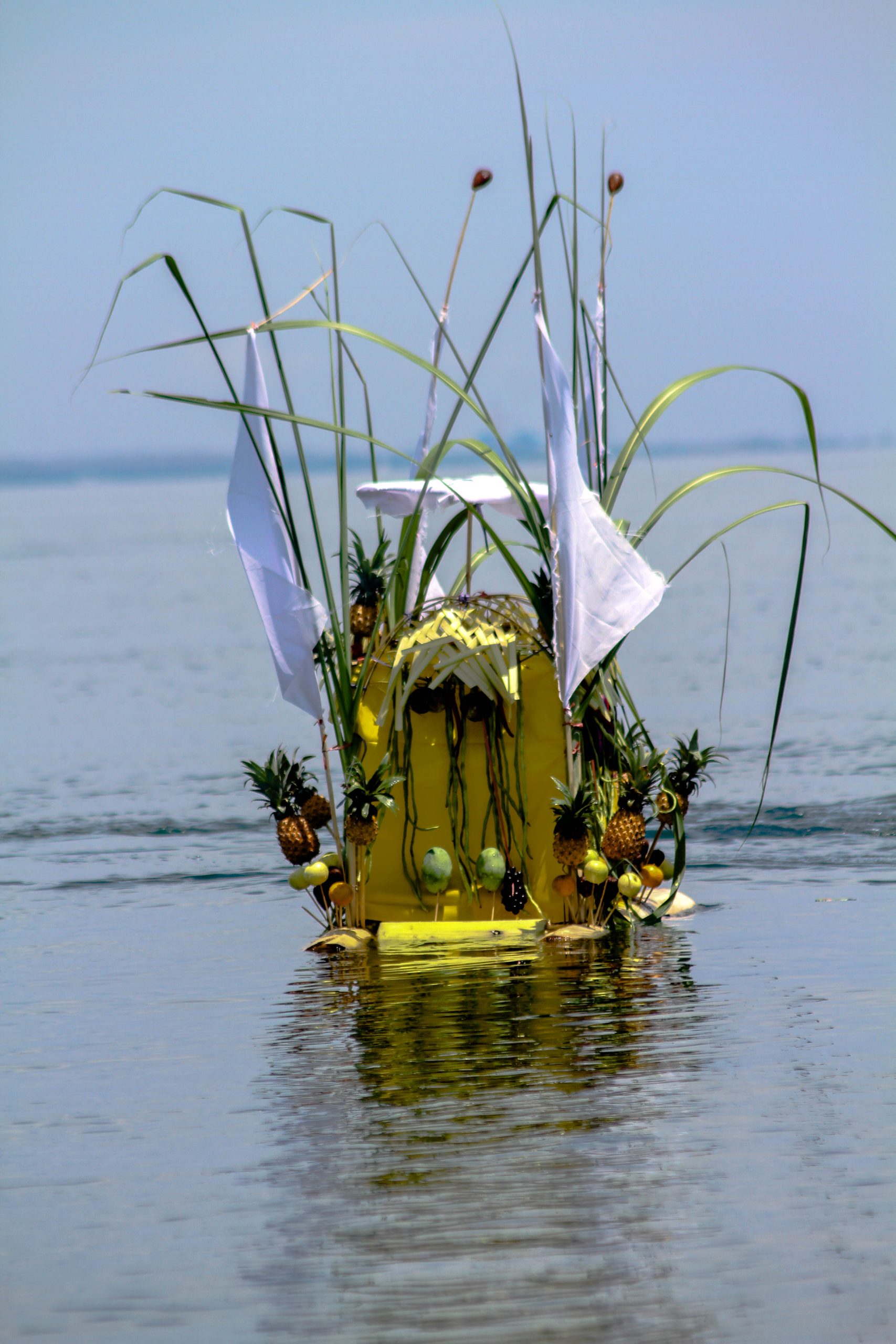
One group carries a large house-shaped offering covered in yellow cloth and decorated with white flags, palm leaves, fruits and vegetables.
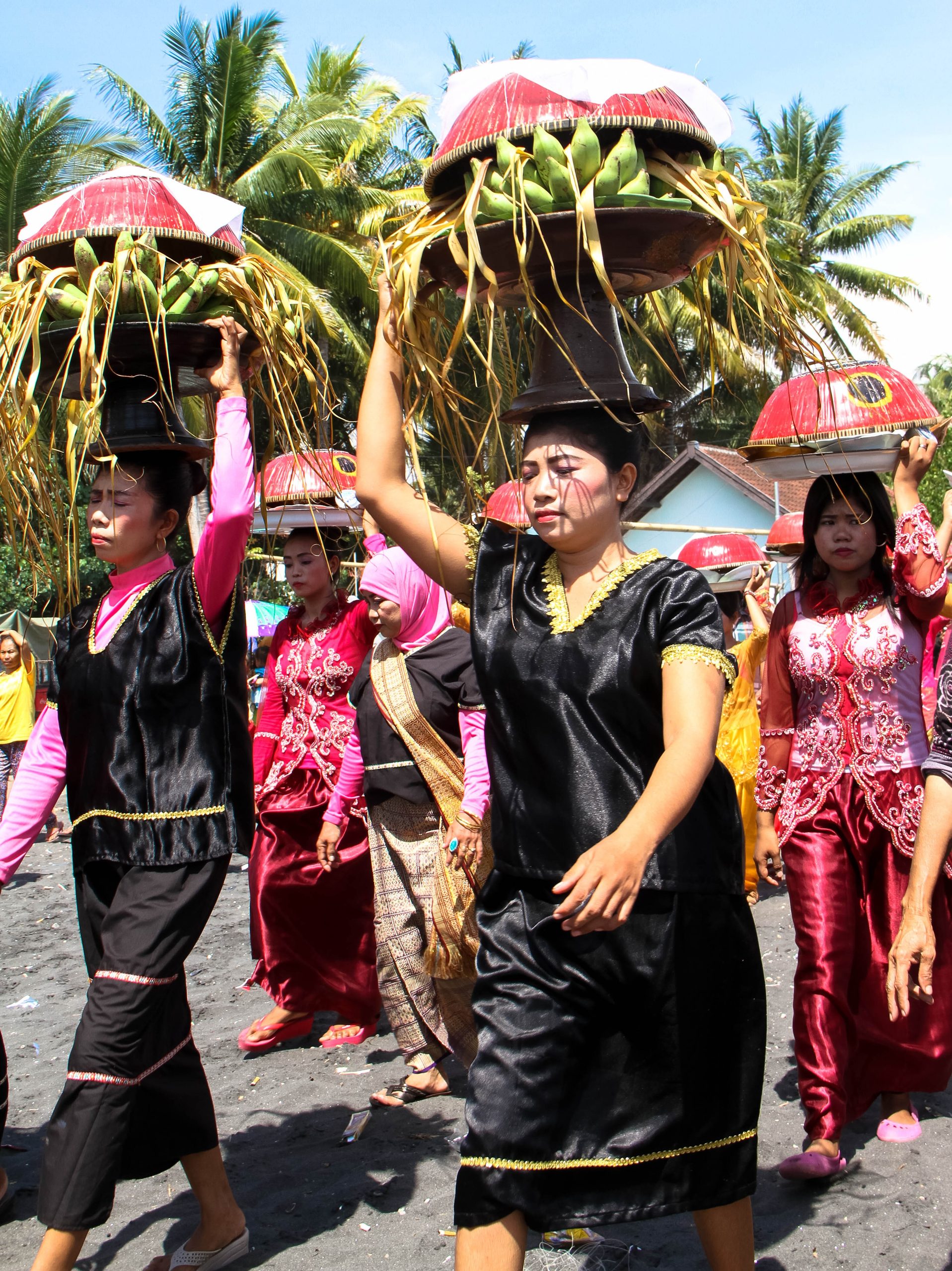
Women are also part of this ritual and a group of elder women bear more offerings, bowls and ceret malingan (traditional water pitchers), accompanied by ladies in traditional Sasak dress and lace kebayak blouses balancing platters of rice, fruits, betel leaves, chicken and other offerings on their heads.
In the centre of the floor, two groups of Sasak adat (cultural) elders sit facing each other and, when the crowds fall silent, the leader begins to chant in the Sasak language, giving thanks to God and asking for blessings and protection from disasters.
The lilting sounds flow back and forth between the leaders of the two groups weaving a hypnotic vocal magic, backed by the soft strains of the long flute.
According to the adat elders, the ritual of Rebo Buntung is a time of reflection on the need for harmony between humans and nature.
The ritual is not just an expression of gratitude to God and an appeal for protection,” the elders explained during the speeches, “Rebo Buntung also serves as a reminder to the community that from time immemorial our ancestors would appreciate and maintain the harmonious relationship between man and nature.”
At the end of the ceremony, everyone joined the procession down to the beachfront.
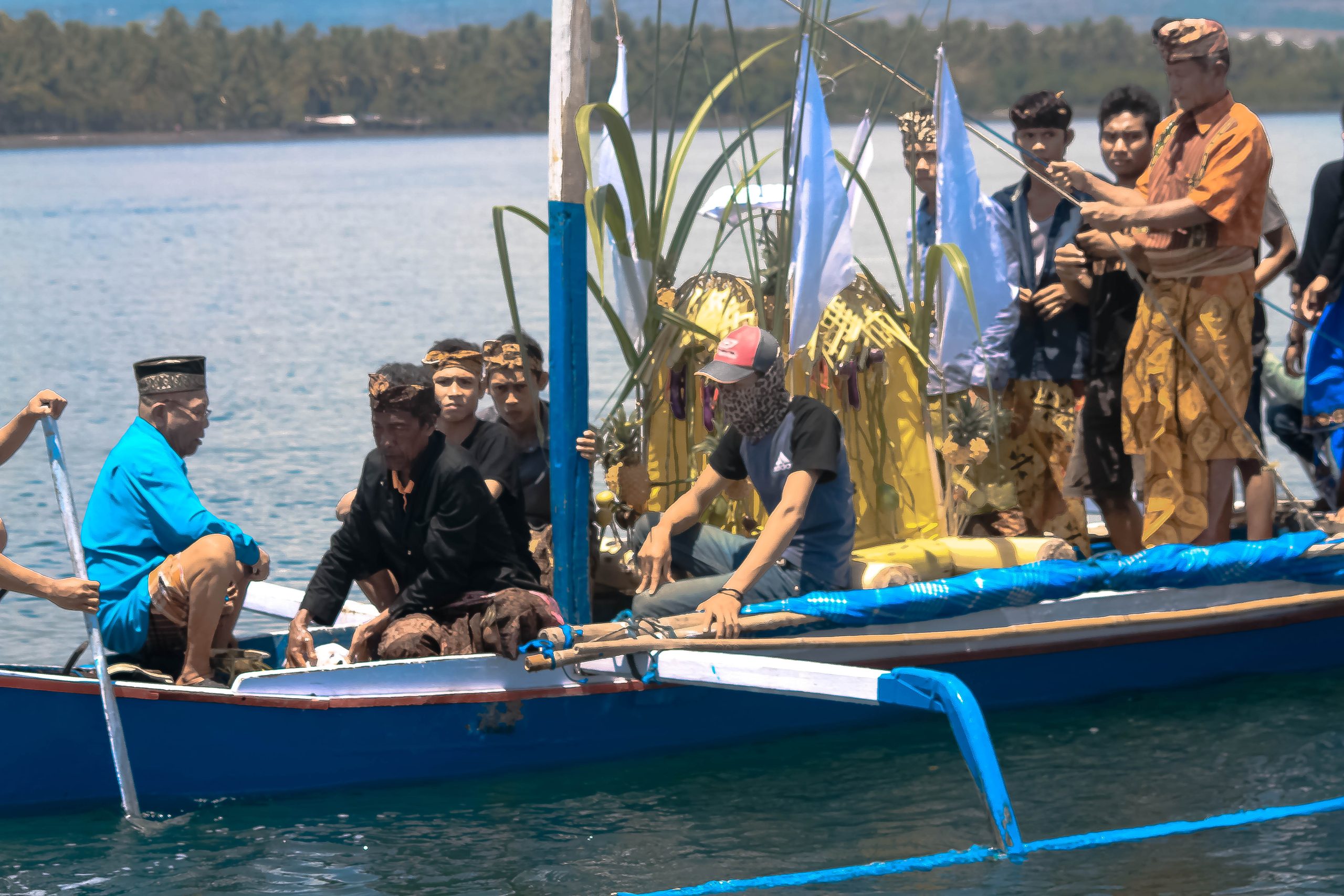
Offshore, three boats were waiting and, as the procession reached the water’s edge, the boats were bought ashore. There was much jostling as the huge crowd drew close to see this part of the ceremony.
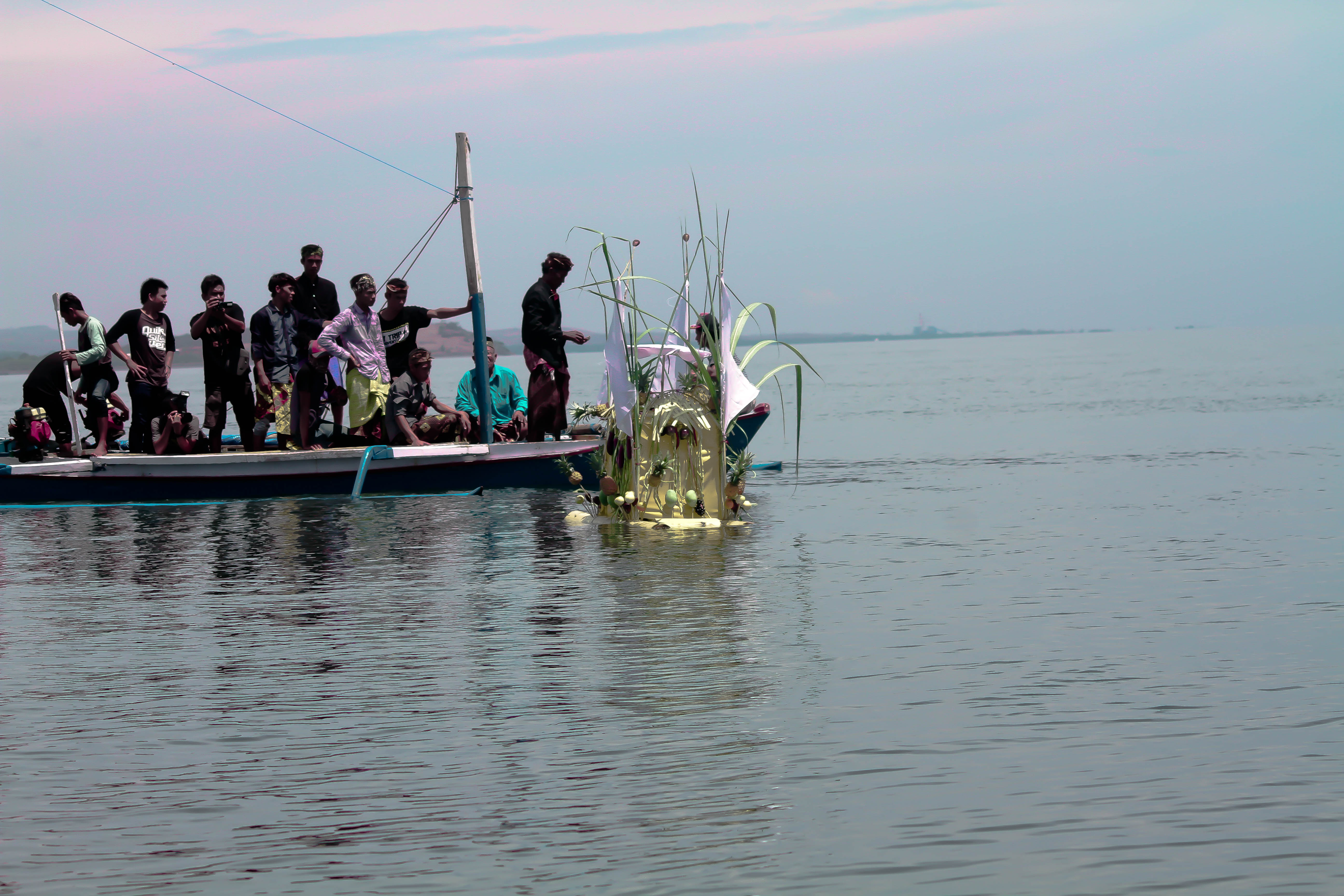
With some difficulty, the elders board the main boat and the offerings, including the buffalo head and the large yellow “house”, were loaded aboard to be taken out into the middle of the sea and cast into the waters as an offering to the Gods.
An important part of the ritual occurs when the buffalo head is thrown into the ocean. If it sinks, all will be well; but if it floats back to the surface, it will be interpreted as a sign of bad luck and the community must prepare itself for some calamity in the near future.
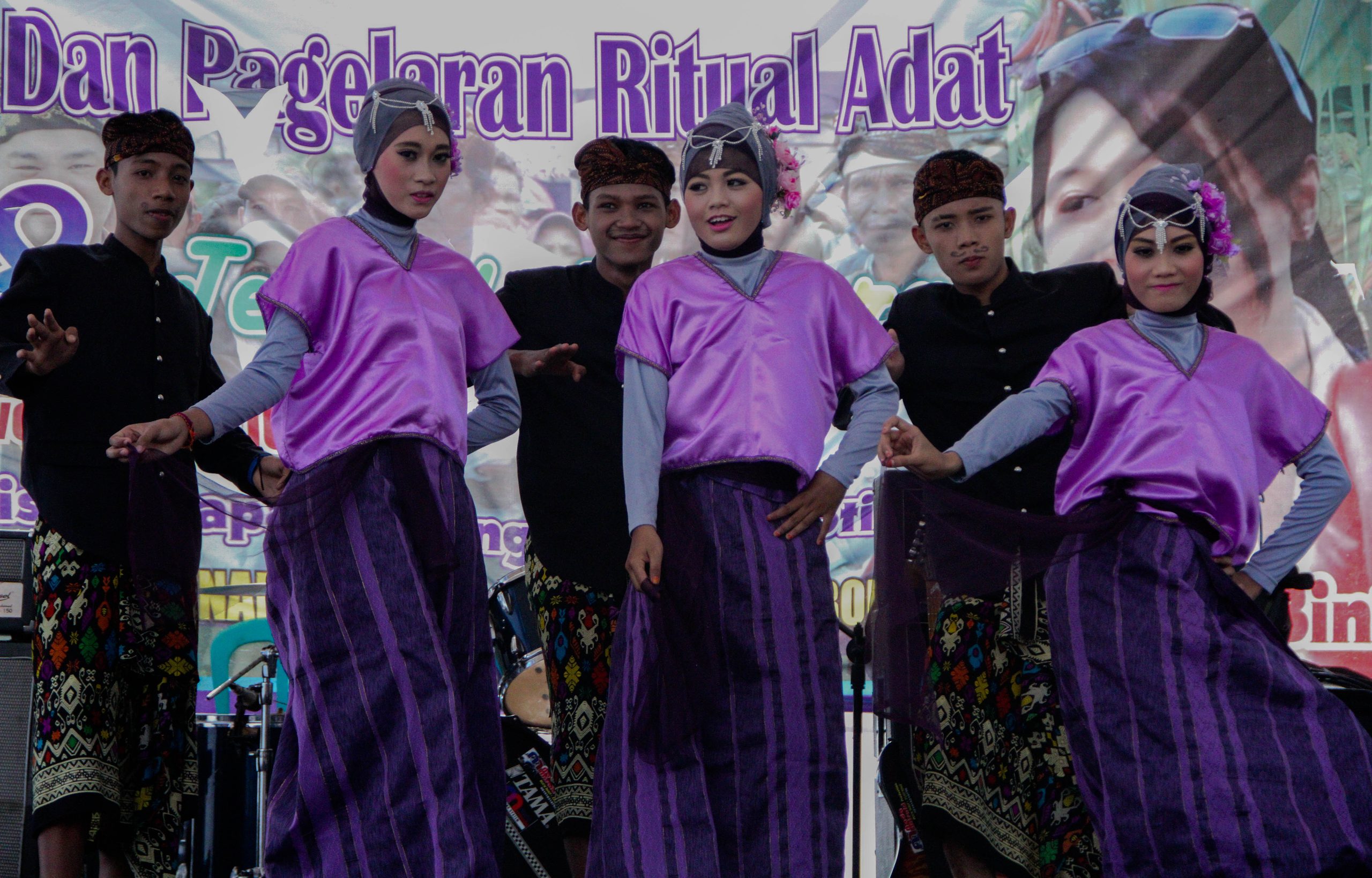
Once the formal part of the ritual is over, the celebrations begin with traditional dances and even a Wayang Kulit shadow puppet performance. By late afternoon thousands of people will join the beach festival with live music and dancing until the early morning… as the whole community celebrates the clearing of bad energies and the return of balance to the universe.